Members
‘Gigantic, gaping holes’
Experts say the Carney government is pushing an unprecedented rollback of Canada’s environmental laws and protections
BY Moira Donovan 8 Jun. 2026

Log in to listen to this article
Environmental organizations and legal experts say recent changes in federal policy are undoing years of climate progress — and that Prime Minister Mark Carney is leading the country through a potentially unprecedented dismantling of environmental protections.
Last week, Canada’s largest environmental organizations called the federal government out on a recent series of environmental changes, including lowering the industrial carbon price, weakening clean electricity regulations, and proposing reforms that would gut the processes meant to protect species at risk and ensure citizens are informed about projects’ impacts.
Before taking office, the prime minister presented himself to Canadians as someone who would act on climate change and other forms of environmental degradation, says Charlie Hatt, Ecojustice’s climate program director.
“And now we have the largest rollback of Canadian climate policy and Canadian environmental laws that we've ever seen.”
Given that about-face, Julia Levin, the associate director, national climate at Environmental Defence Canada, says Canadians have every right to feel betrayed.
“None of this was in the Liberal election platform.”
Ultimately, the changes show the extent to which the federal policy discussion has become divorced from meaningful climate action — despite the prime minister’s stated values in his book, Values.
“What does this say to the world, when one of the wealthiest, most advanced societies waters down their climate policy at this key juncture?” says David Wright, associate professor at the University of Calgary’s Faculty of Law.
“Legitimate as concerns about Trump’s trade war are, and potential loss of jobs through decarbonization [are], it has to be viewed through the lens of virtually imminent catastrophic climate change. So we're way out of balance and … the discourse has become debased from our climate and ecological realities.”
Maintaining a high-emissions trajectory
Some of the recent policy measures have significant implications for Canada’s climate targets.
The implementation agreement for the Canada-Alberta MOU weakens the industrial carbon price, which is the remaining lever for Canadian climate policy following Carney’s dismantling of the consumer carbon price, the planned oil and gas emissions cap, and other tools, says Wright. Alberta’s effective carbon price is now set at $130 per tonne by 2040 (The effective price is currently around $45/tonne).
Previously, the Canadian headline price was supposed to rise to $170/tonne by 2030 (Alberta’s headline price is currently $95/tonne).
Modelling from the Canadian Climate Institute suggests this will keep Canada on a high-emissions trajectory through the middle of the century.
The MOU’s implementation agreement also affirmed the government’s commitment to use an equivalency agreement for methane emissions reductions. This exempts the oil and gas industry from federal methane rules, potentially creating a sleight of hand that could allow Alberta to sneak in a weaker regime.
“There’s wiggle room [with equivalency agreements] that allows provinces to do less than they would have done under the federal regime,” Wright says.
Levin says her organization has seen the MOU as a bad deal for Canadians since it was announced, but the degree to which Carney was willing to weaken carbon pricing and capitulate to Alberta in the implementation agreement has been surprising.
“It's hard not to see that this was his intention all along and he was just using Alberta as a way to push through his deregulation agenda with no political cost.”
What’s more, current federal policy seems to lack a strong evidence base. She says Carney doesn’t seem to care about having any kind of modelling behind the decisions he's making.
“It's a deeply irresponsible way to govern.”
Focussed on fast-tracking
In May, the federal government published a slim discussion paper, outlining a suite of proposed amendments that could weaken the Fisheries Act, the Species at Risk Act (SARA), the Impact Assessment Act, and the Navigation Protection Act.
Advocates say these could give companies permission to build projects that would drive species to extinction. They could also allow projects to move forward before their impacts could be understood, either by exempting them from impact assessments or, in the case of pipelines, allowing the regulator to approve them at the ‘beginning’ of the decision process.
This would limit communities’ and First Nations’ abilities to meaningfully understand what they’re being asked to assess or agree to, says Hatt.
“Who knows what the ‘beginning’ of the process is? This could be before any meaningful amount of environmental assessment has been conducted. Certainly, it's before a final route is determined.”
Taken together, the proposed changes tear “gigantic, gaping holes” in the fabric of environmental laws and protections that have been operating in Canada for decades, he says.
The Assembly of First Nations has said the proposed changes are "not acceptable" as they risk trampling on their rights and “demonstrate a pattern of exclusion."
The window for public feedback was set to close on June 7. However, on Thursday, June 4, just ahead of World Environment Day, the federal government announced that in light of “the valuable feedback from thousands of stakeholders, Indigenous groups, and members of the public across the country,” it was extending consultations on what it’s put forward from June 7 to July 22.
Once that consultation wraps up, the government plans to introduce legislation when Parliament returns in the fall.
A 'problematically vague' plan
If the government moves forward with the changes proposed in the discussion paper, which Wright says is problematically vague and superficial in its details, it will represent a further extension of the deregulation agenda Canadians saw under the Harper government. For example, the Liberals’ proposal to amend SARA and allow some projects to be ‘pre-approved’ and fast-tracked to a one-year review timeline, and to be exempt from the "jeopardy test" for at-risk species, would go beyond what the Conservatives enacted. Proposed federal economic zones would see major industrial, energy, and transportation projects greenlit by cabinet to bypass environmental and regulatory laws.
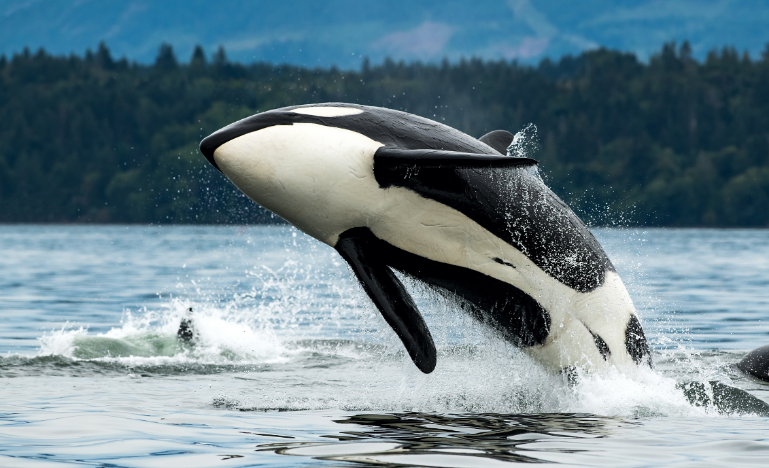
“Wildlife like the southern resident killer whale doesn’t disappear by accident,” says Megan Leslie, the president & CEO of WWF-Canada, who was among those who took to Parliament Hill last week to declare that the Carney government has gone too far with its rollback of environmental protections and climate policies.
“Extinction is a choice — a choice about what we protect and what we sacrifice. This proposal is not a simple technical adjustment; it’s a decision about what Canada values.”
The rollbacks could have substantial climate ramifications, as changes to the impact assessment process heighten the risk that no analysis of a project's implications for Canada’s emission reductions will be conducted.
“The public doesn't get to see a proper, transparent accounting of greenhouse gas emissions and climate change implications, and then decision makers don't have the information they need to make decisions,” Wright says.
“It creates the basis for a very significant blind spot that can come back to bite everyone.”
Observers say it’s also difficult to reconcile how bypassing species-at-risk protections fits with the federal government’s Canada’s 2030 Nature Strategy, which sets out how this country will implement its promises under the Kunming-Montreal Global Biodiversity Framework. The goal is to halt and reverse biodiversity loss by 2030 and put nature on a path to full recovery by 2050, which includes protecting 30 per cent of Canada's land and water by 2030.
As the prime minister stated in March when announcing the strategy, it will “protect and restore critical habitats” and “ensure industrial strategies complement our conservation efforts.”
For Canadians who hoped to see Carney make a stronger commitment to climate action, Wright says there is room for a more hopeful interpretation of his actions. As an intelligent person receiving solid advice on the inevitability and imminence of the green transition, the prime minister is clearing the path for decarbonization rather than fossil fuel projects he doesn’t believe will ever happen.
“It may be that with this big deregulation agenda, even though there is no fidelity to green projects, Carney believes that the market will help push everything in that direction anyway.”
For now, it appears the prime minister has chosen to commit Canada to the opposite path.
National reached out to his office for comment, but has received no response.