Members
First federal youth-led climate trial begins
Observers say La Rose is the ‘most important case in a generation’ when it comes to the right to a healthy environment and government accountability for environmental policy
BY Holly Lake 26 Oct. 2026

Log in to listen to this article
History will be made in a Vancouver courtroom today as Canada’s first federal youth-led climate trial gets underway.
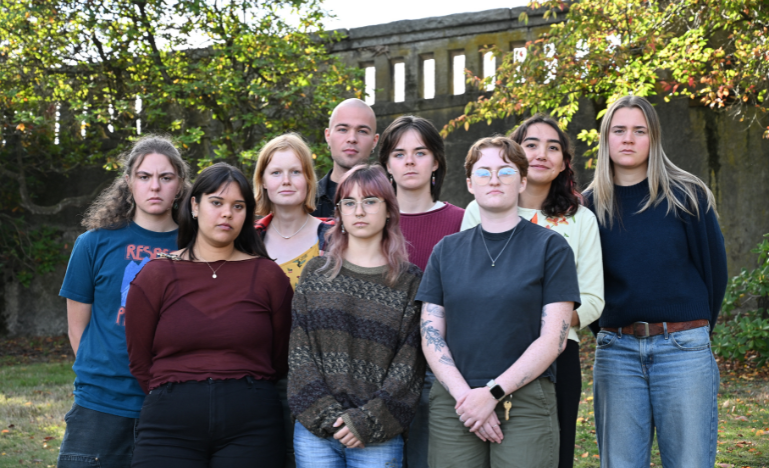
The 15 young Canadians are taking the federal government to court over its fossil fuel policies and its failure to curb greenhouse gas emissions that contribute to climate change. They argue they have a right to live in a world with a safe and stable climate, so this failure to protect them from climate-related harm violates their rights to life, liberty and security of the person under section 7 of the Charter of Rights and Freedoms.
La Rose v. His Majesty the King reaches this stage as courts around the world examine the relationship between climate change and human rights and find that government failures to act on the climate crisis can violate legally protected human rights.
Catherine Boies Parker, K.C. of Arvay Finlay LLP, represents the plaintiffs and says the constitutional rights of children and youth in Canada are not just one more factor to be taken into the mix when making decisions.
“They’re very significant, constitutionally protected rights. So, when the government is making decisions about what level of emissions it’s going to allow, it's going to have to take into account the impact on these children's rights,” she says.
“If the impact is going to be significant, they're going to have to justify that according to the test that the courts have accepted for when governments can interfere with constitutionally protected rights.”
Andrew Gage, a lawyer with West Coast Environmental Law, which is supporting the legal team in the case, says successive governments have viewed climate change as a political issue and maybe a moral issue to some degree, but they have not grappled with the reality that their actions are having devastating consequences to legal rights and the constitutional rights of Canadians.
“There’s this sense that we can continue to push off (climate action) until tomorrow if it's economically or politically convenient to make some short-term gains at the expense of the safety of Canadians more generally,” he says.
“The goal here is to have the court say no — if you're going to contribute in significant ways to violating the rights of Canadians, you've got to take some responsibility for that.”
Although this is not the only climate litigation brought by youth against governments in this country, it marks the first time there will be a full trial with live testimony and cross-examination.
“It's the first chance for these youth to tell their stories in public under oath,” says Dr. Stepan Wood, a professor of law at the Allard School of Law at UBC and the Canada Research Chair in Law, Society, and Sustainability.
“It’s also the first chance that they have to test the government's story and its witnesses on the witness stand with cross-examination, so that makes it unique in Canadian history. It’s also one of the first handful of youth climate cases to go to trial worldwide.”
When it comes to the right to a healthy environment in Canada and government accountability for environmental policy, Wood says, “it's probably the most important case in a generation.”
Gage says it’s important for the judicial process to hear from youth plaintiffs about their experiences and their anxieties about their future.
“Having the judge actually look in their eyes and hear their stories directly, that will be powerful.”
An uphill battle
The case was filed in 2019, and the federal government has tried to prevent it from proceeding, arguing that it is not the role of the courts to weigh in on policy questions about how to address climate change. In 2020, a Federal Court judge agreed that the case should not proceed.
In 2023, the Federal Court of Appeal unanimously disagreed, finding that the government actions at issue are “anchored in legislation, Orders in Council and executive action,” which very much can be challenged on constitutional grounds. The plaintiffs were given the green light to proceed if they amended their claim to be more specific about the legislation or government actions at the heart of their challenge.
While it takes aim at several pieces of climate and energy legislation, it focuses on the Canadian Net Zero Emissions Accountability Act, which didn’t exist when the claim was first filed, and how the plan and emission reduction targets set under it aren’t enough to prevent significant harm to Canadians and restore the climate system.
In all, these young Canadians have waited seven years to have their day in court.
“I think that really emphasizes the tension between the urgency of dealing with climate change and the speed of the judicial process,” Gage says.
In the years since the lawsuit was launched, there’s been a pandemic and a heat dome that killed over 600 people in BC. In addition to atmospheric rivers, storms, and floods, there have been massive wildfires across the country in 2021, 2023, 2024, 2025, and 2026 that burned communities, forced tens of thousands of people to evacuate, and left millions breathing asthma-inducing smoke, transforming the experience of climate change for many.
“These are not natural disasters. These are unnatural disasters,” he says.
“The court will hear directly from the experts who can explain just how these aren't one-off impacts, that this is part of a much broader pattern that's the result of government inaction.”
The trial is moving forward amid a rollback of environmental protections by the Carney government. Gage says that when the prime minister takes actions he knows will increase greenhouse gas emissions, it drives home the disconnect between what’s deemed politically advantageous and the legal requirement to protect constitutional rights.
“That gap is as wide as it's been in years, and maybe more obvious than it's ever been.”
Exceptional circumstances?
The plaintiffs aren’t looking for compensation from the government or for the court to set specific emission-reduction targets, dictate measures that should be undertaken or determine which industry should bear the brunt.
“We're not asking the court to make any of those policy decisions. We're just asking the court to say where's the constitutional line that the government can't cross when it's doing something that affects children's rights,” says Boies Parker.
Wood says what’s interesting in the case is the claims of negative and positive rights. A negative right relates to wanting someone to stop doing things that subject you to an increased risk of injury or death. In this case, that’s burning fossil fuels that cause climate change.
The plaintiffs also claim the government has a positive obligation to do more than it’s currently doing to reduce emissions and curb the effects of climate change.
“That’s the step no Canadian judge has been willing to take yet,” he says.
However, in Gosselin v. Québec in 2002, the Supreme Court of Canada left open the possibility that section 7 of the Charter could impose a positive state obligation in "special" or "exceptional circumstances" where the survival or security of the person is severely compromised by state action or omission.
The Federal Court of Appeal didn’t shut the door on positive rights either. It has also acknowledged the “existential challenge” posed by climate change, which follows the Supreme Court describing it as an "existential threat to human life in Canada and around the world” in 2021.
“These are exceptional circumstances,” says Wood, who’s also the director of the Centre for Law and the Environment at UBC.
If the plaintiffs are successful, this case could mark a turning point.
“It would be the first time that the governments are genuinely held to account for their inadequate action on climate change,” he says.
“They would have to up their game and take genuine, effective action to reduce greenhouse gas emissions from fossil fuels dramatically, in a way that's actually capable of achieving the internationally agreed targets.”
While she’s glad her clients will finally get to have a chance to address the court and her team will have the opportunity to share expert evidence about the harms of climate change, Boies Parker says they’re also excited to put forward expert evidence about the potential for Canada to get to net zero by 2050 in a way that’s more beneficial and prosperous than not making the reductions the government has promised to make “over and over again.”
“The transition doesn't have to be one that is all difficult.”
Yes, there will be challenges, but she says their cost-benefit analysis is very clear: Canada will be better off when it reduces its GHG emissions and transitions to an economy that is more consistent with what it has promised to do and avoids significant harm to the climate system.
“I think it's important that that story be told too,” Boies Parker says.
“We can have prosperity, we can have growth, and we can have adequate protection of these children's rights. We’re hoping our evidence will make that clear.”
The trial is expected to last four to five weeks. Access to the livestream can be requested here.