Members
‘I thought she was nuts when she said I’d be a judge’
Harvey Brownstone, the first openly gay man to sit on the bench in Canada, on his turbulent path to the judiciary and the cinematic life he’s come to lead along the way
BY Madalyn Howitt 3 Jun. 2026

Log in to listen to this article
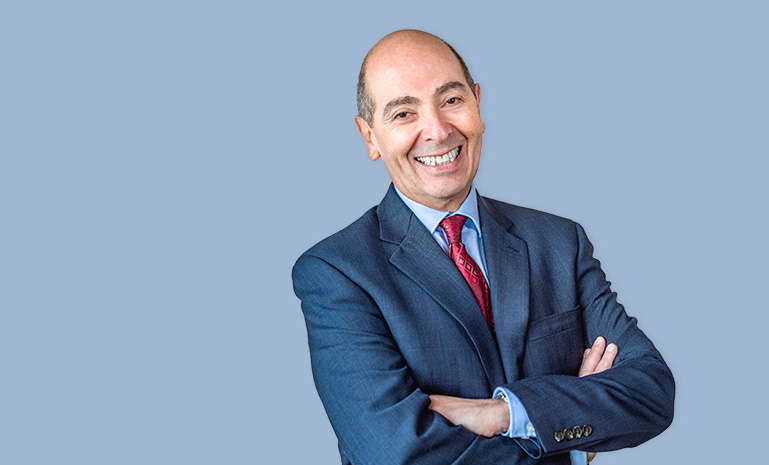
Harvey Brownstone was thrown out of his home at 19 because of his sexuality. He went on to become the first openly gay judge in Canada. To say his career has followed an unusual trajectory would be an understatement.
Along the way, he’s collected no shortage of stories, which he’s sharing in a candid new memoir, "Without Prejudice: My Life as a Gay Judge."
“I think your readers will be interested in the book,” Brownstone said when he reached out to National, “because to my knowledge it’s the only book written by a Canadian judge (or retired judge) that has ever told the truth, once and for all, about what really goes on in the criminal and family justice system.”
The book has already been made into a Hollywood feature film, due out in September, in which David Arquette plays him.
It chronicles Brownstone’s road to the bench, which was marred by childhood bullying, intolerant parents, poverty, and homophobic colleagues. Yet it was also buoyed by perseverance, supportive mentors, including a former Supreme Court justice, and a law school scholarship at Queen’s University. It eventually led to a 26-year career at the Ontario Court of Justice.
“I kept a journal. I think it's therapeutic, especially if you've been through incidents that you weren't powerful enough to deal with the way you wish you could have,” Brownstone says of his decision to write about his life on the latest episode of Verdicts & Voices.
The myriad of obstacles he faced, as well as the support that came his way, ultimately informed how he handled the people who ended up in his courtroom. That includes the complicated relationship with his mother, a Holocaust survivor who raised him in Hamilton, Ont.
“My mom was a really quite a force of nature, and she was a person certainly from whom I inherited all of my drive and my ambition and my need to be somebody in life,” Brownstone says.
But in 1976, when he told his mother he was gay, her reaction was “beyond volcanic.”
“I can't explain the decibels of screaming and wailing and hollering and crying that went on when I told my parents. My dad, of course, couldn't get a word in edgewise, but my mother got it in her head that if she threw me out, that would be tough love, and I would come to my senses because this couldn't be happening. This was not the son she raised. She wants her real son back.”
Barely an adult, with no money, family to depend on, or place to live, Brownstone suddenly found himself in crisis and in need of welfare support.
He cleaned houses to scrape by, and once dressed up in a suit to raid the food table at a conference he wasn’t actually attending.
“When you're 19 years old, and you're hungry, and you want to make something of yourself, you do whatever you have to survive,” he says.
“And I will tell you this, it made me a better judge.”
Brownstone told the Judicial Appointments Advisory Committee he was willing to bet he was the only person they would ever interview who spent five years on welfare.
“I knew what it was like to be on the outside looking in. I knew what it was like to be poor. I can't tell you how many times in court I would have people say, ‘You're a judge, you're rich, you don't know what it's like to be on welfare.’ And I would say, ‘I was on welfare before you were born.’ So, it did change my way of dealing with people because I empathized and I understood.”
A Supreme mentor
It was a connection through a friend from law school that helped Brownstone land a family court clerkship in Toronto in 1979.
“Considering the awful jobs I'd had before that — most of them at the steel company in the blast furnace — this was a dream come true,” he recalls.
“Who do I get assigned to but Rosalie Abella, who at that time was in her early 30s. She was a brand new judge, she was full of excitement, she was full of enthusiasm, she was different than any other judge in that building.”
Brownstone describes Abella, who went on to sit on the Supreme Court of Canada, as a problem-solver and a judge who would use her role to speak directly to litigants, which was “unheard of” at the time.
“I was smitten, mesmerized,” he says.
Abella was also an ally. When she learned that Brownstone never spoke about his family because his mother had kicked him out for being gay, she was “mortified.”
Brownstone says Abella liked to pick his brain and felt he had a sense of justice and how to decide disputes. So, she became a mentor and encouraged him.
“Rosie said to me, ‘You know what? You don't need her. You don't need anybody. You just keep working hard. I believe you're going to be a great lawyer, and I think you could even be a judge.’”
Brownstone says he thought she was nuts at the time, as her support was in such stark contrast to the law professors who told him he’d never get a job because he was an out gay man.
“I didn't think I'd get a job even as a lawyer,” he says.
“A fish out of water’
He did, of course, become a lawyer, even working as duty counsel during the infamous Toronto bathhouse raids in 1981.
As a straight-A student, he landed interviews with all the top firms on Bay Street. But he never met a woman, a person of colour, or anyone under the age of 55.
“They were clones of each other. They were wearing gray pinstripe suits. They had this poindextery kind of look to themselves,” Brownstone says of colleagues early in his career.
“It was clear I was a fish out of water.”
Breaking into the boys’ club of law meant taking on the culture of ignorance every day. Brownstone recalls one colleague telling him, ‘Our clients are big shots, they're these He-Man, macho industrialists. You’ve got to be a man's man to work at this firm.’
“I threw my arms in the air, and I said, ‘Sir, I am the walking definition of a man's man.’ To this day, I don't think he got what I was saying. They were totally in the dark,” he says with a laugh.
Tune into the full episode to hear what it was like for Brownstone to see other queer judges come out after he was appointed and to find out more about his popular celebrity interview program, Harvey Brownstone Interviews, which is televised in the UK and available on YouTube.