Members
More Belgian chocolate or a Belgian beer hangover?
Musing about what an EU associate membership might look like for Canada
BY John Schofield 29 Sep. 2026

Log in to listen to this article
As a Toronto-born lawyer with a longtime practice in Brussels, Mark Camilleri delights in the city’s old-world charm, its beautiful architecture, fascinating history, and delicious food—including its famous beer, fries, and chocolate. But at times, the de facto capital of the European Union can be a little lonely for a Canadian in search of fellow expats.
“I've been forgotten out here,” he jokes.
“Surprisingly few Canadian companies pass through Brussels.”
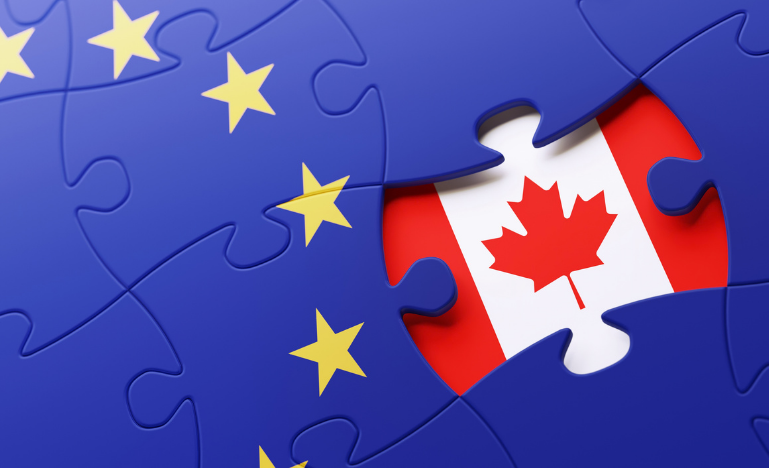
That could be about to change—in a big way—in the wake of European Commission President Ursula von der Leyen’s bombshell invitation to Canada earlier this month to become the EU’s very first associate member.
The door opened during her state of the union address to the European Parliament in Strasbourg, France, with Prime Minister Mark Carney in attendance.
“To me, that was a moonshot moment,” says Camilleri, the president and CEO of the Canada EU Trade and Investment Association.
Sweet or sour?
But what exactly would an associate membership look like? Good question. This is new ground that has Canadian businesses, pundits, and lawyers trying to figure out whether it will mean more sweet Belgian chocolate or a bad Belgian beer hangover.
“Right now, whatever term is being used for the future EU-Canada relationship, it remains an open vessel, and it is unclear, including to its leaders, how exactly this will be filled and based on what timeline,” said University of Ottawa law professor Wolfgang Alschner, who holds the school's Hyman Soloway Chair in Business and Trade Law.
Whatever shape it takes, Camilleri expects it will likely surpass the Comprehensive Economic and Trade Agreement (CETA) inked between Canada and the EU in 2016.
“It's going to require more than just government-to-government connections,” he says.
“It’s going to require new institutions in some cases, but also getting businesses more engaged in terms of the conversation.”
Alschner notes that under CETA, most tariffs on goods have already been banished, except for some supply-managed sectors like dairy. More work could be done, however, to harmonize or mutually recognize regulatory benchmarks, such as Canadian food safety standards or EU product safety standards.
“One day, a car allowed to drive in the EU may be allowed to drive in Canada,” he says.
“That is dull, takes time, and often encounters opposition from interest groups, but it would be highly meaningful since the Canadian market is based on standards often designed to be compatible with the U.S. and not with the EU.”
Reducing regulatory barriers could look more like the association agreements the EU already has with several countries under Article 217 of the Treaty on the Functioning of the European Union (TFEU), including Norway, Ukraine, and several Mediterranean and Central American countries.
The deepest of those agreements, like the one inked with Norway, essentially provides for full participation in the single market, with the free movement of goods, services, capital and people. In return, experts say, it makes Norway an EU “rule-taker.” That’s a maple-leaf red line Canada may not be willing to cross at a time when it’s striving to assert its sovereignty.
From a nice-to-have to a must-have relationship
At the very least, Camilleri says the quest for associate membership will prompt Canadian politicians and businesses to take CETA more seriously. The agreement, he notes, has never lived up to its full potential.
“CETA will become even more important in terms of ... trying to empower that institutional infrastructure to reduce regulatory frictions,” he says.
“We are going to start seeing a lot more accountability in this relationship, really, at the top level. The Canada-EU relationship has moved from being a nice-to-have to a must-have.”
In their brief meeting on St-Pierre and Miquelon Sept. 20, Carney and French President Emmanuel Macron pledged to focus on skilled talent mobility and workforce planning as part of a new bilateral pact.
CETA already includes provisions that could allow for the freer movement of professionals. But a decade after its signing, only Canadian and European architects have negotiated a mutual recognition of professional qualifications.
“There's a lot that Canadian lawyers can learn about the free movement of their own profession,” Camilleri says.
The deepening relationship could certainly spell more business for lawyers, says Sean Stephenson, a partner at Dentons in Toronto, whose expertise includes international trade and sanctions.
“Law firms tend to follow our clients,” he says.
“I think firms are consistently looking at the transatlantic corridor as something to build out.”
Associate membership could also broaden Canada’s multitude of separate agreements and program memberships in areas such as education (the Erasmus+ program), research (Horizon Europe), energy co-operation, critical minerals, artificial intelligence and climate initiatives.
This could also extend to defence procurement, as Canada is the only non-European member of the Security Action for Europe defence procurement system. Many of those already involve a financial commitment on Canada’s part.
“I think we are building the plane while we’re flying it,” Stephenson says.
“There's a lot on the table, and I think that's going to play out over the next probably year or two.”
More details may be revealed at the upcoming Canada-EU summit in Montreal in late October.
The long runway to square one
Whether the plane gets off the ground remains to be seen, says leading trade lawyer Clifford Sosnow, a partner with Fasken Martineau DuMoulin and chair of its international trade and investment group. He notes that although CETA has been applied provisionally since 2017, it hasn’t been ratified by 10 of the EU’s 27 member states.
“CETA is not all that it can be,” he says.
“The same 27 member states would need to agree to create a new treaty amendment to bring in what's called associate membership, and not only to define what it is, but whether to extend it to Canada.”
For many Canadian businesses, Sosnow says meeting dual product standards or overcoming the geographic distance of Europe relative to the U.S. will never make sense. In the security sphere, Canada’s deeply integrated defence relationship with our southern neighbour could be another potential stumbling block.
“The EU is the second-largest market in the world. There is value in building bridges to access that market,” he says.
“But unless the legal architecture is clarified, it's not clear how we even get to square one.”