Membres
Constitution not an 'à la carte menu'
Quebec’s new parliamentary session in limbo after judge grants injunction and orders members of legislature to swear oath to the King
PAR Dale Smith 23 novembre 2026

Connectez-vous pour écouter l'article
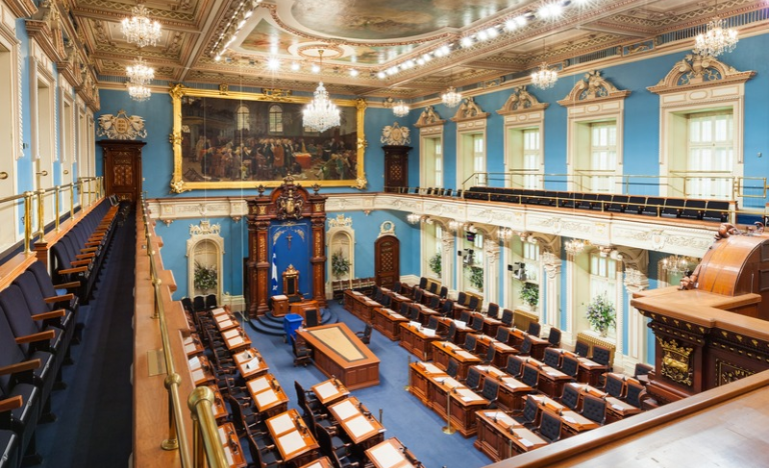
Members of Quebec’s National Assembly must swear an oath to King Charles before they take their seat in the provincial legislature.
That’s the order from a judge who granted an injunction suspending the provincial law that claimed to amend the Constitution and exempt members from swearing allegiance to the monarch.
“The Constitution is not an à la carte menu from which an individual subject to its authority may choose to follow only what suits them," Justice Ian Demers wrote in his ruling.
The decision leaves things up in the air for the parliamentary session, which was originally set to get underway on November 17. After being pushed back, the start was rescheduled for December 1. Demers said any laws passed in the National Assembly could be invalid if members have not taken the oath before taking their seats.
That will be the case until a challenge of the law can be heard on its merits. Further, the judge’s order says the injunction applies even if the Quebec government chooses to appeal the decision.
Quebec Premier Paul St-Pierre Plamondon told reporters in Montreal that he will appeal the decision.
“I will be considering all legal and political options to respect democracy,” he said at a news conference.
“I cannot take an oath to the King of England. And I think we are dozens and maybe more than 100 elected members of parliament duly elected through a democratic process who think it's a disgrace.”
In 2022, the Coalition Avenir Québec government passed legislation that made the oath optional for elected members in the province by amending the application of section 128 of the Constitution Act, 1867.
The Public Interest Litigation Institute launched a constitutional challenge, arguing the provincial government acted unlawfully when it unilaterally amended the Constitution Act. Any such amendment requires the unanimous consent of Parliament and the provincial legislatures.
In October, the Institute filed a request for a stay of the law's application.
Lawrence David, a University of Ottawa law professor and head of the Institute, says an appeal of the injunction is not automatic.
“They need to seek leave from the Court of Appeal, and that will require a hearing for that to take place.”
That's unlikely to happen by December 1, which may further push back the legislature’s opening.
“Quebec politicians have a choice to make,” David says.
“Do they take the oath of allegiance, or do they not take the oath and violate a court order?”
He says that for a court to grant a stay pending the merits, there must be a demonstration that the law is manifestly unconstitutional.
“That’s why the stay was granted — (this is) manifestly unconstitutional,” David says, noting the judge accepted their argument that the stay is in the public interest.
Justice Demers has ordered the parties in the case to provide a schedule for the merits phase of the constitutional challenge by December 18. Despite the injunction, that will still move ahead and be heard by him.
David says if the Court of Appeal reverses the injunction, he will appeal to the Supreme Court of Canada.
University of Waterloo political science professor Emmett Macfarlane says the decision is great for the rule of law. It wasn’t a guaranteed outcome, as courts are sometimes wary of going too deep into the merits of an ongoing constitutional challenge.
“The judge did a pretty good job explaining why, on its face, the law itself is likely unconstitutional,” he says.
However, the decision was still cautious, particularly regarding the central question of whether a province can purport to amend Canada’s Constitution unilaterally. Macfarlane says he was worried by the decision’s opening, where the judge said it’s valid for governments to want to amend the Constitution, and that the amending formula lays out how to do that.
“This misses a key distinction to be made in the ongoing litigation, and that is provinces unilaterally don’t have any amending authority as it regards the Constitution of Canada. What they can amend are their own provincial constitutions.”
He says this isn't just about whether the matter being amended is something the province can do. The more important and fundamental question is whether the province can purport to make textual changes to the Constitution Act, 1867.
A spokesperson for the National Assembly says that they are “currently reviewing the judgment of the Superior Court of Québec, but will not be commenting on this matter.”