‘She was quite a force’
Global community marks International Women’s Day mourning Iraqi-Canadian women’s rights activist Yanar Mohammed
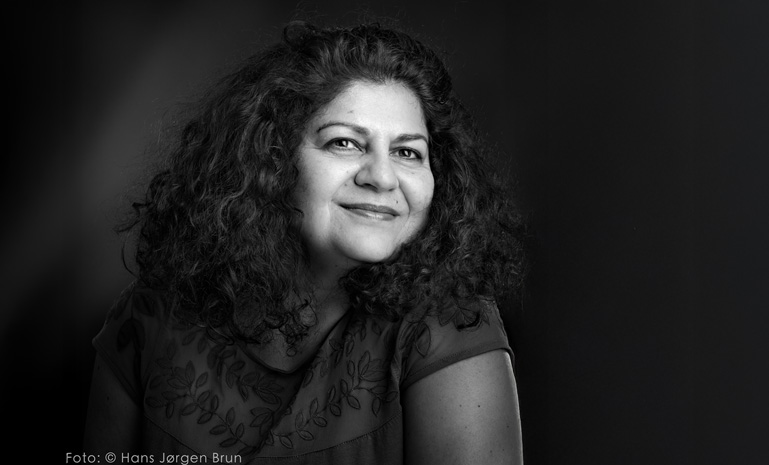
This International Women’s Day, organizations around the world are calling on Iraqi authorities to conduct a thorough and independent investigation into the assassination of prominent Iraqi-Canadian women’s rights activist Yanar Mohammed.
Mohammed, 66, was shot outside her Baghdad home on March 2 by unidentified gunmen on a motorcycle.
She split her time between Toronto and the Iraqi capital, and had only just returned to the latter to organize for its National Women's Day, celebrated on March 3, and International Women’s Day.
“She went every year,” says Lisa Davis, a professor of law and co-director of the Human Rights & Gender Justice Clinic at the CUNY School of Law in New York, unless it was too risky to do so and she was convinced to stay away.
“This week of events was very important to her work.”
Right-wing extremists who had made threats on her life ensured Mohammed didn’t get to see that through.
Prime Minister Mohammed Shia’ al‑Sudani ordered an investigation into the killing the day she died.
“Iraqi authorities must ensure the investigation they have ordered is prompt, effective, thorough, independent and impartial, in line with international standards,” Razaw Salihy, Amnesty International’s Iraq Researcher, said in a statement.
She said Mohammed dedicated her life to defending women’s rights, and her killing is a calculated assault to stifle human rights defenders — a pattern Iraqi authorities must stop in its tracks.
The United Nations condemned the “heinous murder.” Volker Türk, the High Commissioner for Human Rights, whose office worked closely with Mohammed, said “she was engaged tirelessly and with dedication to provide protection to many women victims of domestic and social violence.”
In a social media post, he called for a “prompt & transparent investigation, holding the perpetrators to account.”
In Norway, the Rafto Foundation, a non-profit organization dedicated to the global promotion of human rights, called on Iraqi authorities to “bring those responsible to justice” and guarantee the protection of all human rights defenders living and working there.
The group said it was “deeply shaken” by news of “this brutal attack on one of the most courageous human rights defenders of our time.”
“The assassination represents not only an attack on Yanar Mohammed as a person, but also on the fundamental values she dedicated her life to defending: women’s freedom, democracy, and universal human rights.”
In 2016, Mohammed was awarded the Rafto Prize for her work on behalf of women and minorities in war-torn Iraq. The honour is often considered a strong precursor to the Nobel Peace Prize.
She also received the Gruber Prize for Women’s Rights in 2008 and the Eleanor Roosevelt Global Women’s Rights award in 2013.
‘Crimes of patriarchy’
Mohammed described her work as focused on protecting women in Iraq from the crimes of patriarchy. In an interview with the Ottawa-based Nobel Women’s Initiative, she said that before the U.S. invasion, polygamy, child marriage and honour killings were “almost forgotten in the modern history of Iraq.”
“The occupation in 2003 turned all this around and allowed extremist groups in Iraq to rule and decide how women’s rights would be violated,” she said.
“The government has allowed an agenda that is dismissive of women’s rights. The government policies are based on religion and are extremely patriarchal and tribal, and they preach hatred of women.”
Born in Iraq, Mohammed fled to Toronto in the early 1990s with her husband and infant son. Working with other women from her country, she established the Defense of Iraqi Women's Rights in 1998. In 2004, it became the Organization of Women's Freedom in Iraq (OWFI) and relocated there.
OWFI created the first secret shelters for women in Iraq fleeing domestic violence, sex trafficking, and honour-based violence. The organization currently operates 10 safe houses, but the work extended beyond the shelter walls to advocate for women’s rights.
“We confront practices against women that need to be addressed, and we try to change legislation or public practices and opinions,” Mohammed told the Nobel Women’s Initiative.
“Women should not have to compromise and be ruled by the patriarchs of the country. Women should not have to compromise for religious or tribal values of the country. Feminism can save the future generations from these crimes.”
The shelters brought safety, but also transformed the women who fled there. Davis says most people working at the shelters were residents at one point and became empowered activists.
“She trained the staff, half of whom are men, in the values and understanding of women's rights,” Davis says, noting Mohammed had “incredible patience” as she worked to bring them along.
“She had this fundamental core belief in equality for all people, that you don't compromise on that or qualify that depending on who the person is. The idea that everyone has equal rights was the premise of her work. I think part of her legacy will be how much she changed the hearts and minds of so many Iraqis.”
The work to enhance women’s rights and cultivate a grassroots and national network of allies extended to the newspaper Al Mousawat, which Mohammed co-founded, and the Al Mousawat Radio Project, a broadcast in Iraq that featured programming advocating for equality.
Beyond journalism, Mohammed worked with organizations across Iraq to teach classes on human rights and built international alliances to fight against violence, human trafficking and sex slavery.
Rachel Vincent, the former director of media and advocacy at the Nobel Women’s Initiative, says Mohammed was “a gem of a person” whose valiant, brilliant and pragmatic work was underpinned by her unique ability to articulate the connection between U.S. foreign policy, oil, and how women are treated during and after war, and how militarization in general deepens oppression and violence against them.
“She was that rare person who could deliver a very necessary service to women, but also articulate to a global community why this matters, what the root causes are of why women have to seek protection, and what's wrong with our systems.”
Mohammed had already been heavy on Vincent’s mind recently, given what’s unfolding in Iran, which was aligned with the U.S. in efforts to remove Saddam Hussein during the invasion of Iraq.
“Bedfellows change, but what doesn't change is the high price women pay for the use of military solutions to solve very real problems like dictatorship and autocracy. It’s not the right path.”
Liz Bernstein, former executive director of the Nobel Women’s Initiative, says Mohammed connected the dots between patriarchy and militarism in a very real and human way.
“She was a combination of smart analyst, strategist, organizer, communicator and fun, funny, kind, and warm. There were no pretensions. She was so down to earth for being so smart and analytical of the way these systems interlocked and oppressed women.”
Bernstein says whether it’s the women’s movement, the peace movement, or human rights work, people working within these realms can “get kind of stuck in our ways.” But Mohammed bridged gaps and brought people together.
“She really did help us make the connections of what needs to be addressed in terms of actual equality, human rights and peace and security, and drive home how to go about addressing the changes we need to see in institutions and governments,” Bernstein says.
“She was quite a force. I just felt so lucky to know her, learn from her, be inspired by her and laugh with her.”
Death threats for decades
It was, of course, work that brought incredible risk. Although Iraq has made progress on women’s rights since 2003, including implementing the region’s first national action plan supporting women, peace and security, and entrenching a requirement in the country’s constitution and electoral laws that a minimum of 25 per cent of the seats in its national parliament must be held by women, Polly Kyle, a women, peace and security advisor working in Baghdad, says honour killings remain a real problem.
“When I talk with women's civil society groups or women in the armed forces, they know more people dead than alive right now when it comes to working for women's rights,” she says.
“To call this a shame does not begin to encapsulate how hard it is (to lose) someone who had survived for so long.”
Mohammed faced death threats for decades. While she was careful and assessed the risk level to determine when she’d return to Iraq, Davis says their friend generally took it in stride and didn’t fear for her life.
“It’s that drive and that force. She would never stop working in this movement…There was no punching in and out of the clock. It was her whole life, and it was infectious. She was incredibly brave. Her passion drove her courage.”
When Davis received a death threat stemming from their work in Iraq, Mohammed’s response was: “You’re in. You’re finally in the club.”
In a sad and ominous foreshadowing, Mohammed had talked about the tools used to silence women’s rights activists in Iraq, noting those in power had found elusive ways to attack them. That included filing a lawsuit to dissolve the Organization of Women’s Freedom in Iraq.
“The government starts with smear campaigns, then court cases, to stop you from doing your human rights work, and if that doesn’t work, then they kidnap and kill you,” she said.
Berstein says reading that interview now is “heartbreaking.”
Amnesty International says Mohammed’s death “fits a chilling pattern of targeted killings and attempted killings of activists” the organization has documented in the aftermath of the Tishreen protests since 2019.
“The persistent failure of the Iraqi authorities to hold perpetrators accountable for past assassinations has entrenched a climate of impunity that continues to place activists at grave and fatal risk. Human rights defenders, including women’s rights defenders in Iraq, must be protected — not silenced and killed.”
‘We'll keep on fighting to the end’
Perhaps this ever-present threat was part of the reason Mohammed always celebrated the wins, no matter how small.
“She knew how to take a moment and just say we won. Maybe we'd only won a grain of sand on the beach that we're trying to build, but that's one more grain of sand we didn’t have to work for,” Davis says.
“As activists, we forget that because we're so used to the conveyor belt coming down at us.”
To mark these occasions, the pair would often break into song, belting out Queen’s, We Are the Champions.
“We’d make this promise that we'll keep on fighting to the very end. That's the lyric in the song. She certainly kept up her end of that bargain, so I've got to keep mine,” Davis says.
Through her work over the years, Mohammed saved hundreds, if not thousands, of lives.
“The tragedy of losing her is to think about the thousands of women who will not have her leadership," Davis says.
“There’s a giant hole left where she was, for sure.”
Bernstein finds it particularly poignant to be mourning a woman who had such an incredible impact on International Women’s Day. She says it’s a time not only to mark the hard work ahead, but also to celebrate successes, the love and compassion people bring to this work, and the accomplishments they’ve made in moving the needle.
“As Yanar would say, speak out and struggle for women's freedom and equality every day. We certainly need to keep doing so,” she says.
“They killed one great movement builder, but won't kill the movement.”