Designing the justice system differently
Ontario Attorney General Doug Downey says people need to be met where they are
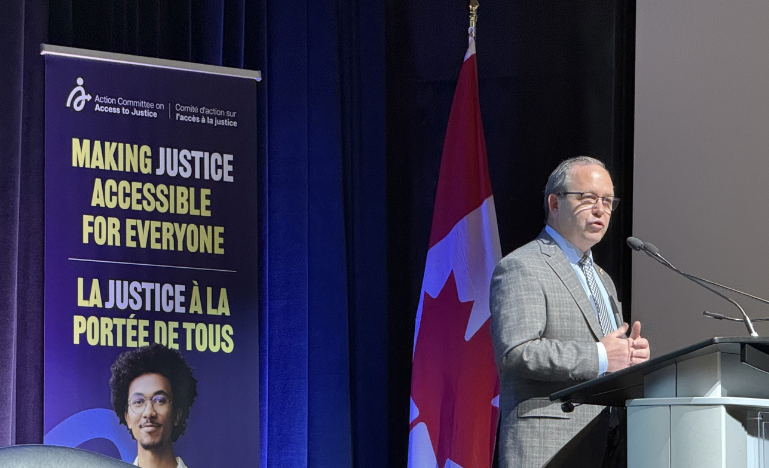
Built by lawyers and judges for lawyers and judges, the justice system doesn’t always consider the actual people who come before the courts, says Ontario Attorney General Doug Downey.
Given the high cost of legal services, hiring a lawyer is just not an option for many people with an issue to resolve, so they’re left on their own. It’s estimated that roughly 50 per cent of all civil cases in the country involve at least one self-represented party. In family law, that can reach as high as 80 per cent. He says that throughout his career as a practicing lawyer, there’s been an ongoing conversation about how to ensure people have representation.
“Maybe we need to design the system so they don't need it,” Downey says.
“Maybe we need to accept the reality that we're not going to get lawyers for everybody with an issue that comes to the courts. Maybe we need to simplify processes and have off-ramps for what their real issues are.”
While people come to the court with a legal problem, it’s often underlying life problems that have led them there.
“We're not servicing this; we're just solving the technical legal problem. Ithink we can do better, and I think you can help steer us there,” he told those attending the Advancing People-Centred Justice in Canada conference in Ottawa on Wednesday, which was organized by the Action Committee on Access to Justice.
“My ultimate vision is that we have a TurboTax of family law.”
That would allow people interacting with the justice system to select options from drop-down menus that capture their situation and issue. The interface would then point them to outside resources to start plugging in the services they actually need to solve their problem, which in turn would allow them to focus on and resolve the smaller legal issue.
Designing the system differently is the thinking behind the justice centres Ontario has been piloting in London, Kenora, and Toronto over the past several years.
Aimed at 18 to 25-year-olds, the centres move justice out of the traditional courtroom into a community setting. They bring together justice, health and social services to address the root causes of crime and reduce the risk of re-offending.
“We took the machinery of the courts out to where the social services work, “ Downey says.
“We have to make sure that we’re meeting people where they are.”
He stresses the centres aren’t diversion programs, as offenders are still held accountable. However, they’re also connected to mental health, addictions, housing, health, and employment supports. In Kenora, Indigenous elders are also part of the available support structure. At first instance, judges give offenders the option of using the resources or doing things the traditional way.
Downey says the several years’ worth of data collected at the Kenora centre shows the recidivism rate, which has traditionally been around 88 per cent, has dropped to 40 per cent.
“We are connecting people with their history, we're connecting them with their resources …and they’re putting themselves on different paths. That’s really the magic of what we're doing,” he says.
“So it is possible to create a system that is different, that is people-focussed.”
Beyond the services offered, the physical architecture and what people are met with when they come through the front door are also part of this.
“When you walk into a courthouse, you get a feel, and that's on purpose. There's the hierarchy of structure, the power of government, and whatnot,” Downey says, noting we’re still building courthouses based on 50-year-old designs.
“Justice centres don't do that. You walk in, and it might just be a table and a normal room. It takes away the crushing weight of the state for somebody who really feels disempowered already.”