Newfoundland and Labrador provincial courts adjourned ‘indefinitely’
Observers decry lack of explanation and transparency around the decision
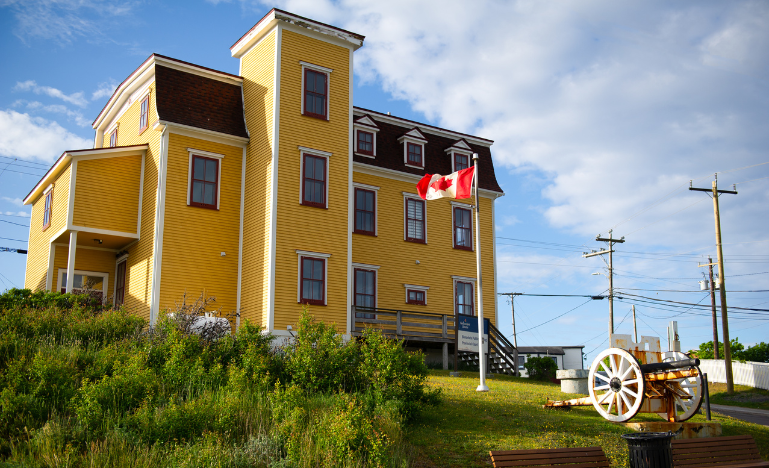
Provincial Court civil hearings, traffic and contravention cases in Newfoundland and Labrador have been adjourned “indefinitely.”
The court has announced that parties will be contacted regarding rescheduled dates, offering “these challenging times” alone as the reason for the shutdown.
Criminal and Newfoundland and Labrador Supreme Court cases are not affected by the closures.
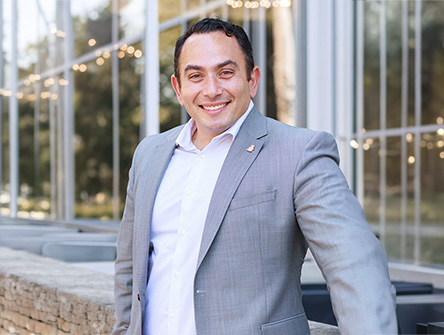
St. John’s lawyer Devin Drover, who is also general counsel and Atlantic director of the Canadian Taxpayers Federation, says that while the recent announcement offered “no meaningful explanation” from the court or the justice minister, he’s heard this is the result of a shortage of sheriffs to provide courtroom security.
An official, not authorized to speak with the media, told National that “the current staffing situation” for sheriffs responsible for courtroom security meant there were not enough sheriffs to meet the need.
“Then, for security reasons, they closed some of the courts temporarily,” they added, noting the process for hiring more sheriffs is underway.
While the courts have full authority over their own scheduling and case management decisions, Justice Minister Helen Conway Ottenheimer said in a statement that the province’s new Progressive Conservative government is “committed to an approach that is rooted in communication, collaboration, and partnership with the judiciary, ensuring that solutions are developed together in a positive and constructive manner.”
On Monday, she met with Chief Judge Robin Fowler and Associate Chief Judge Jennifer Mercer of the Provincial Court of Newfoundland and Labrador.
“I made it clear that our new government is committed to improving access to justice and supporting solutions that strengthen the entire justice system,” Conway Ottenheimer told National in an email.
No immediate solution appears to be in the cards, however. The minister says she will meet again with the top judges in January
“We are dedicated to building a justice system that is accessible, responsive, and equipped to meet the needs of the people of this province,” she said without explaining why the courts are closed.
Travel to the Channel-Port aux Basques circuit was to be suspended after Dec. 5, with future cases to be heard in Stephenville, which is nearly a two-hour drive away. Baie-Verte circuit cases were suspended immediately. That means all scheduled cases will now be heard two hours away in Grand Falls-Windsor.
As of Jan. 14, there will be biweekly Mental Health Court sessions in St. John’s on alternate Wednesdays. The Intimate Partner Violence Intervention Court will run biweekly in Stephenville and Grand Falls-Windsor.
Drover says shifting hearings to different locations will be a burden on people who must travel for court appearances.
“These cases still matter a lot to the people who are involved in them."
He’s disturbed by the lack of transparency around the decision to close the courts.
“How long will this go on? A month? Six months? Longer? I haven’t seen anything like this in terms of mass adjournments since COVID-19.”
Robyn Coish, executive director of the Canadian Bar Association’s Newfoundland and Labrador branch, says that while she understands the courts are under significant operational strain, the closures represent “a profound access to justice crisis for the people of this province.”
“Many parties, particularly self-represented litigants, have no other meaningful avenue for resolving civil disputes,” she said in a statement.
“CBA-NL has been concerned about court capacity and systemic strain for some time. Similar pressures are being felt across the country, but they now stand squarely before us in Newfoundland and Labrador. This is an issue that impacts everyone, including the Crown, private practitioners, and most importantly, the public.”
The Association is calling on the government, court administration, and the legal community to collaborate in addressing this crisis and restoring Provincial Court operations in the province. Coish said the association will be writing to the minister “to express our concerns and to offer our assistance.”
Much of the Provincial Court's case load in the province involves small claims of up to $25,000, which can be crucial for a contractor in the middle of a project who needs that money to continue.
Elsewhere, including Alberta, small claims can run as high as $100,000. Drover has pushed for an increase in the small claims limit to expedite the handling of matters, pointing to cases he is aware of where a $40,000 claim was reduced by $15,000 to qualify for small-claims treatment, which can be settled within a year.
Claims over $25,000 go to the Supreme Court of Newfoundland and Labrador, where it can take “years, and years and years” to get a trial date, he says.
“These are kind of big issues to be swept under the carpet.”