Court’s in session
Here’s a round-up of the Supreme Court of Canada cases we’re watching this winter
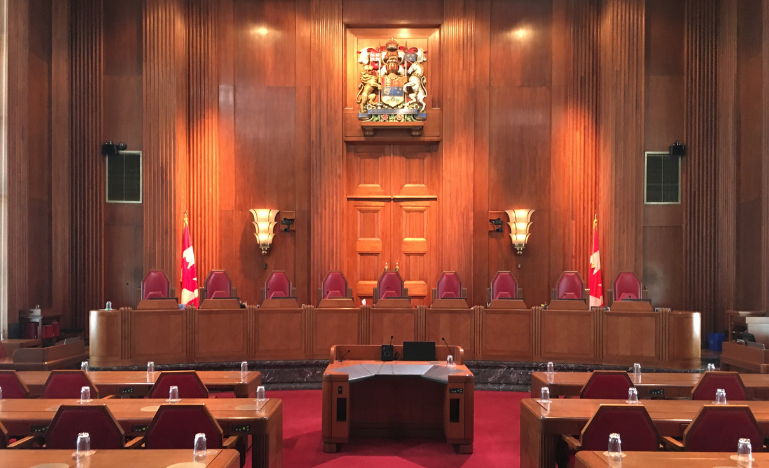
We’re kicking off a new season of the Verdicts & Voices podcast with a look at the slate of cases the Supreme Court of Canada will hear during the winter session.
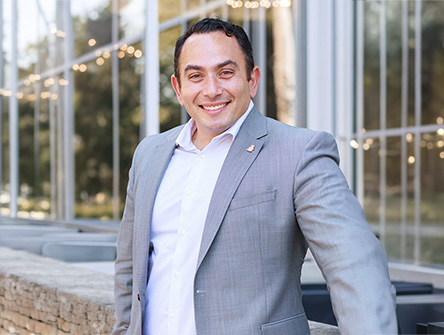
Nadia Effendi, a partner at BLG in Toronto, who can often be found watching or presenting arguments at Canada's top court, takes us through the cases she’ll be following.
Democracy Watch v. Attorney General of Canada
The fallout from the WE Charity scandal reached the Supreme Court earlier this month. The case considers whether Parliament (or another legislature) can limit an applicant’s ability to bring judicial review applications through statutes.
To recap: Democracy Watch applied for judicial review of a report by the federal ethics commissioner, which had concluded that former Prime Minister Trudeau hadn't breached the Conflict of Interest Act when he participated in two decisions involving WE Charity. The attorney general then moved to strike, as there was a privative clause which barred review of questions raised in this case.
The Federal Court of Appeal dismissed Democracy Watch’s application for judicial review, determining that the privative clause protecting the commissioner is good law.
Following the Vavilov decision in 2019, there was an issue about whether or not legislators could partially restrict judicial review, and “whether or not that was proper and constitutionally valid,” Effendi says.
She thinks the Court will be inclined to grant the appeal and find that a reasonableness review on all issues is constitutionally required, and can’t be ousted by a privative clause.
“It would clarify certain things, and it would constitutionalize, effectively, judicial review.”
Maxime Bergeron c. Assemblée parlementaire des étudiants du Québec inc., et al.
In Bergeron, the question the Court will have to grapple with is whether a lawyer can act as counsel for a family member.
As for the facts, Bergeron, a university student, was expelled from a mock parliament organized by one of the respondents, the Assemblée parlementaire des étudiants du Québec inc. Bergeron asked his father, a lawyer, to represent him in challenging his expulsion, but the Superior Court disqualified him.
Effendi says there are two things at play here. First, there’s a party’s fundamental right to choose their counsel. However, there's also the need to preserve public confidence and the appearance of impartial justice.
The question for the Court will be whether we apply the same principle applicable to conflicts of interest in the context of the disqualification of a lawyer.
“In other words, was there enough distance between the father and the son in this case, and when and what kind of evidence would have to be brought in order for a court to disqualify a lawyer?”
Nathalie Sinclair-Desgagné v. Directeur général des élections du Canada, et al.
This matter relates to last year’s federal election and the unusual circumstances of a Quebec MP winning their riding by a single vote.
A judicial recount was ordered in the riding of Terrebonne, with the official result putting Liberal MP Tatiana Auguste one vote ahead of Bloc Québécois candidate Nathalie Sinclair-Desgagné. The latter challenged the result after a Bloc voter claimed her special ballot was returned to her, uncounted, because of an error in the address on the envelope provided by Elections Canada.
“Was that an irregularity, frankly, within the scope of the statute sufficient for the whole integrity of the electoral process to be at issue or not?” Effendi says.
“The Court is going to have to decide whether the Quebec Superior Court erred in deciding not to annul the federal election results in that case for the Terrebonne riding.”
Quebec Maritimes Junior Hockey League Inc., et al. v. Lukas Walter et al.
This involves a class action on behalf of the members of the Quebec Maritimes Junior Hockey League (formerly the Québec Major Junior Hockey League) about their pay. More narrowly, the issue centres on the legal obligation of lawyers to their class-action clients.
What happened: Effendi says a settlement was reached, but the court basically rejected the initial agreement.
“There was a revised settlement, and … while initially the two plaintiffs had agreed to it, they then decided to withdraw their support, and they changed their mind and sought new counsel.”
The Superior Court determined that the original lawyers should continue to represent the class, notwithstanding the fact that their clients had effectively said they disagreed.
Effendi says the Supreme Court will have to clarify the ethical obligation of lawyers to their clients in the context of class actions. More specifically, it will have to shed light on whether a lawyer has a client relationship only with the class representative.
“Who do you represent as class counsel? Simply those plaintiffs or much broadly, and does that put the lawyer in a conflict of interest position?”
Aphria Inc. v. Canada Life Assurance Company, et al.
How does a case involving a company that wanted out of a commercial lease end up at the Supreme Court?
Read on.
The issue in Aphria is whether commercial landlords owe a duty to mitigate their damages when a tenant repudiates the lease, Effendi says. The Court is being asked to revisit a 1971 decision in which it found that landlords owed no duty to mitigate when a tenant repudiates. Also, they could claim damages against a tenant.
Admittedly, those who don’t practice real estate law might think this is boring, she says.
“I think it's a very fundamental issue, especially when you look at the market and what's going on, some of the economic challenges.”
Facebook Inc. v. Privacy Commissioner of Canada
In the world of privacy law, Effendi says this case will be closely watched. It stems from a complaint filed with the federal privacy commissioner about Facebook sharing users’ information with third-party applications, specifically Cambridge Analytica.
“The narrower issue here that the Court is going to have to weigh on is whether the length of an organization's privacy policy, if it's read, provides adequate disclosure and can invalidate a user's consent,” she says.
“It's really all about the meaningful consent from users. More generally, the Court is going to opine on how courts should determine whether an organization has obtained meaningful consent to disclose information to a third party, and whether an organization has to make certain safeguards.”
English Montreal School Board, et al. v. Attorney General of Quebec, et al.
More than 60 intervenors will be part of this hearing challenging the constitutionality of Quebec’s secular legislation, Bill 21, which prohibits the display of religious symbols in public institutions. Given the province’s use of the notwithstanding clause, this is a highly anticipated case — and this isn’t its first rodeo at the Supreme Court.
It reached the top court on a leave application, but leave was denied. Now, it’s back.
“What has actually caught the attention, I think, mostly of the legal community and the public, is the use of the Quebec legislature of the notwithstanding clause.” Effendi says.
Also raised in the case are rights guaranteed equally between the sexes, as well as minority-language, education, and democratic rights.
“We really have an interesting case here, and we'll have to see how far the Court goes in terms of the interpretation of the scope of the notwithstanding clause.”
Tune into the full episode for more details on the Supreme Court winter session and Effendi’s thoughts on Justice Sheilah Martin’s surprise retirement announcement.