Members
The case for creature comfort
How connecting with animals can keep lawyers happy, healthy, and productive
BY Julie Stauffer 10 Mar. 2026

Log in to listen to this article
Sara Forte will tell you she’s not a dog person.
She has two cats and some backyard chickens, but she’s happy to hang out with other people’s pooches. That’s why, a few years ago, when her legal assistant asked if she could bring a canine companion to the office, Forte agreed.
“As long as I can be direct and transparent about how it’s working for me and you can be direct and transparent about how it’s working for you, then yeah, let’s give it a go,” says Forte, head of Forte Workplace Law in Surrey, B.C.
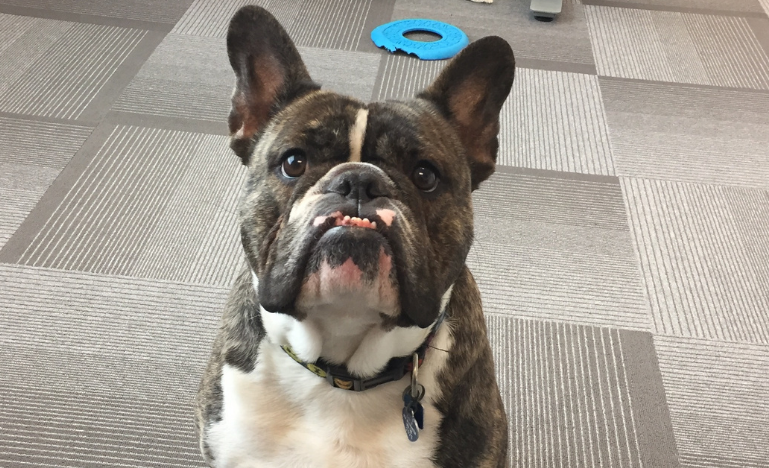
Besides a little temporary trouble with gas, Roscoe made it easy. The droopy-faced bulldog spent most of his time sleeping on the floor, providing a calming vibe. He also had a knack for knowing who to engage with. He was happy to trundle out for cuddles and pats, but equally content to simply snooze.
Forte saw how Roscoe’s presence boosted the morale of her growing firm, which now numbers about 25.
“He is so relaxing to be around,” she says.
“I think there is a wellness benefit.”
That’s backed up by science. Studies show that petting dogs lowers stress hormones, while boosting feel-good oxytocin.
“They’re decreasing our stress, anxiety, what have you, and increasing our feelings of calmness,” says Colleen Dell, a sociologist at the University of Saskatchewan who studies human-animal bonds.
Other benefits include encouraging healthy breaks — whether it’s to walk the dog or just take a brief pause from a file. Dogs live in the moment, she says, and they draw us into that moment as well.
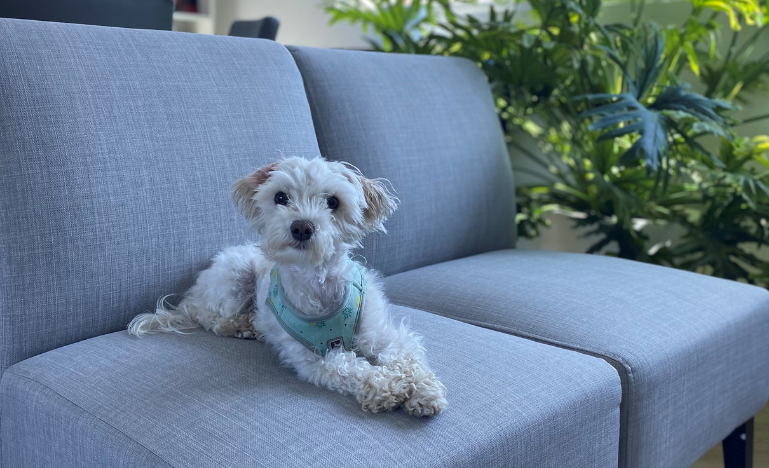
Waffles
As for Roscoe, he didn’t just charm Forte and her staff. He also put many clients at ease, breaking the ice and creating a natural point of connection.
Indeed, the furry experiment proved so successful that the adorable Waffles joined Roscoe at the office a few years ago.
“They’re great for recruiting,” she says.
“I use their images a lot.”
Making it work
More than 60 per cent of Canadian households have companion animals, which makes pet-friendly offices an attractive perk for a huge chunk of the workforce who don’t want to leave their best friend home alone all day.
The key is to find ways to make it work. For Forte, that meant keeping the firm’s canines away from the client area, fostering open discussions, and trying things on a case-by-case basis.
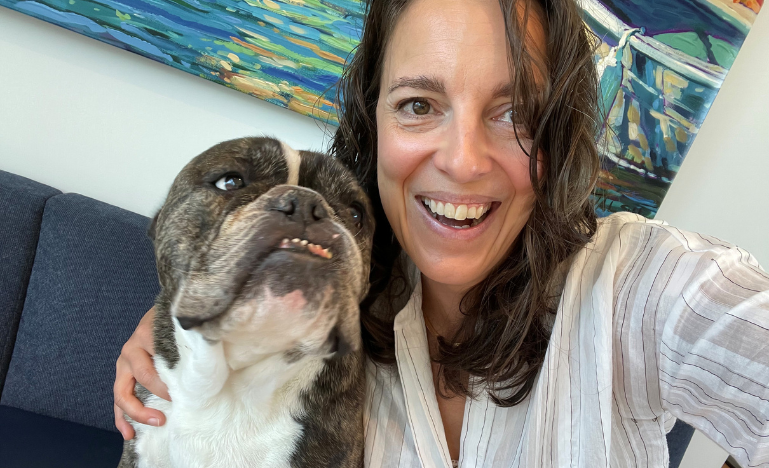
Roscoe & Sara Forte
Because as they’ve discovered, not every dog is cut out for office life. One new puppy proved a little too rambunctious. Another dog barked whenever its owner stepped away for a meeting.
Even the best-behaved critters may not be appropriate for a professional setting. Staff or clients may suffer from allergies or be fearful of dogs. Commercial landlords may prohibit pets in their buildings. And managing puppy pee breaks can be untenable if you’re on the 20th floor of a high-rise office tower.
At the same time, it’s also important to consider the dog’s perspective.
“This is not a tool for humans to use. These are sentient beings,” Dell says.
Beyond the office dog
If bringing your pet to work isn’t feasible, there are still ways to reap animals’ stress-reducing rewards — whether it’s a fish tank in the lobby, hybrid work arrangements that let you spend time at home with a pet, or cuddle time with your animal when you get home.
For Louis DelSignore, it’s horses. He started riding when he was young and later competed on his university’s equestrian team. But the demands of law school and his subsequent job at a litigation firm in New York City forced him to put his hobby on hold.
Several years later, a move to McKenzie Lake Lawyers in London, Ontario saw him putting in long hours to build a personal injury practice and serve his clients. It was late one night when he finally decided he needed to do something he enjoyed besides work.
He started making inquiries about buying a horse. The arrival of Johahn a few months later changed his life.
“You can cancel a gym class or a session with a trainer, but you can't so easily cancel on a living, breathing animal that depends on you. You make time for them and therefore yourself,” DelSignore says.
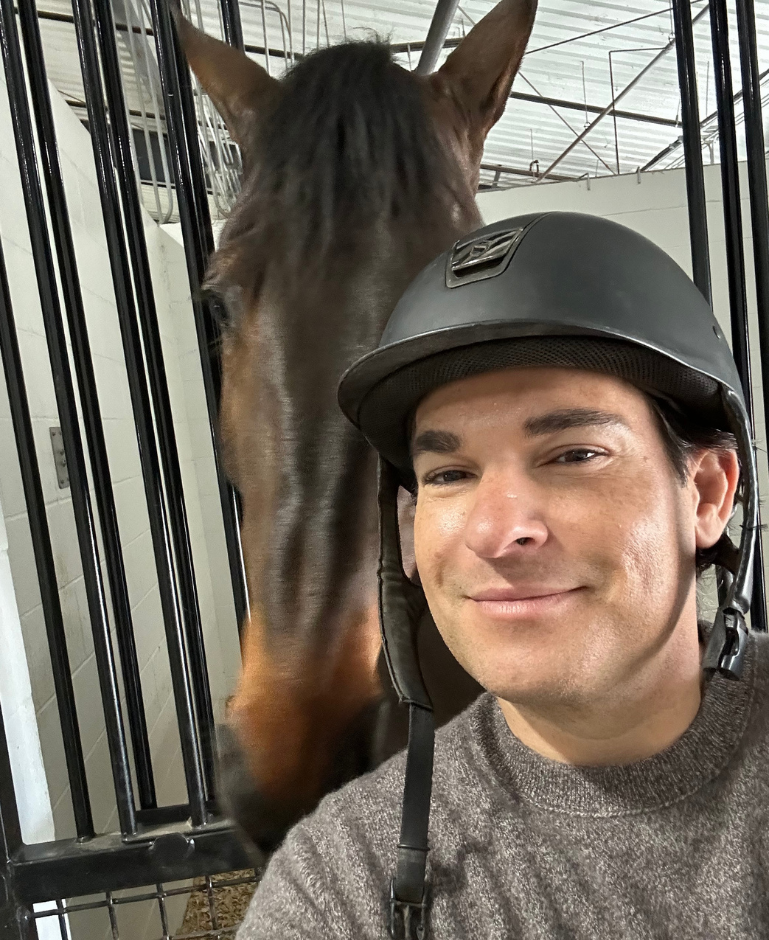
Louis DelSignore & Roxy
The benefits go beyond physical exercise and fresh air. Just stepping inside the stable gives him a boost.
“I just love the smell, the feel, the calm of a barn,” he says. “It’s the only time when I’m not on my cell phone.”
Although competing wasn’t his goal, DelSignore ended up re-entering the world of competitive show jumping and qualifying for the U.S. nationals.
It’s a lot of work on top of an already packed work schedule. But he insists his horses bring him professional perks as well — from increased mental strength and renewed vigour to networking opportunities.
“It really allows me, in many ways, I feel, to be a better lawyer because I’m fulfilled and passionate about something else in my life.”
In addition to personal injury, DelSignore’s practice has also gone to the horses, expanding to include equine law, where he assists people, companies, and horse owners with a range of horse-related issues.
Wellness-boosting bonds
Animals aren’t an antidote to all the pressures of a high-powered legal career. But as Dell points out, their non-judgmental presence makes a difference.
“They’re easy to connect to,” she says.
“They can fulfill a role that humans cannot.”
Whether it’s working with a dog under your desk, cuddling your cat at the end of the day or making a weekly trip to the horse barn, that contact can offer all kinds of wellness wins.