Supreme Court rules that national security committee legislation stands
At issue was whether it was constitutional for Parliament to legislate limits to the free speech of the MPs and senators on the committee
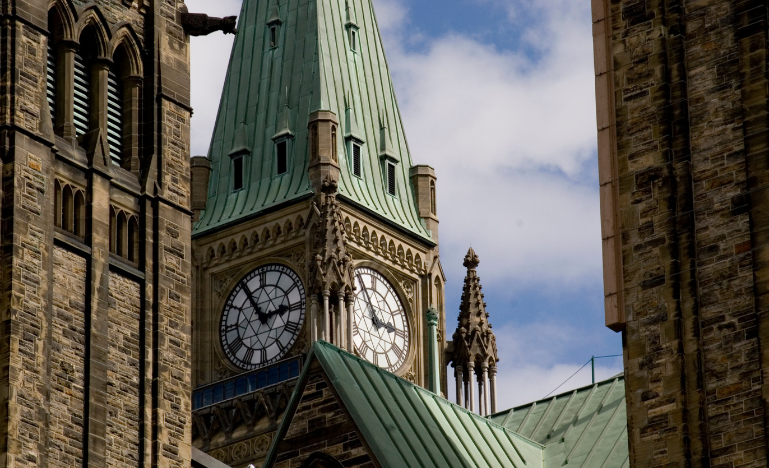
The Supreme Court of Canada has ruled that the legislation creating a federal committee to oversee national security and intelligence matters is valid.
At issue was whether it was constitutional for Parliament to legislate limits to fundamental parliamentary privileges, specifically the free speech of the MPs and senators on the National Security and Intelligence Committee of Parliamentarians (NSICOP), which was created in 2017.
Not a parliamentary committee; it was constituted as an executive body composed of parliamentarians with security clearances. Section 12 of the National Security and Intelligence Committee of Parliamentarians Act limits the parliamentary privilege of those members. That means they could face criminal prosecution for disclosing secret information, even if it’s done within the confines of Parliament, where their privilege would normally protect them.
Ryan Alford, an associate professor of Law at Lakehead University, launched a constitutional challenge to the section. He argued that MPs and senators on the NSICOP couldn’t be stripped of immunity that shields them from lawsuits and prosecutions for what they say during parliamentary proceedings about the secret matters they examine as part of their work.
Rather, they must be free to act as whistleblowers who can reveal state secrets if the agencies they oversee abuse their powers.
The Ontario Superior Court agreed with his concerns that this infringement of privilege, as laid out in Section 18 of the Constitution Act of 1867, was beyond the scope of ordinary legislation and would require a constitutional amendment. The Ontario Court of Appeal disagreed, finding that this kind of privilege limitation was acceptable under ordinary legislation.
In an 8-1 decision, the Supreme Court of Canada dismissed the appeal, finding that this is a permissible use of legislation to limit that privilege.
“In my view, it cannot be said that s. 12 of the NSICOP Act constitutes an ‘abrogation’ or ‘elimination’ of freedom of speech in Parliament, as the appellant contends,” Justice Malcolm Rowe wrote for the majority, emphasis his.
“It has a circumscribed effect: it applies only to the disclosure of specific national security information that was obtained by members of the Committee through their participation on the Committee.”
Rowe added that the limit on privilege is narrow because parliamentarians choose to sit on the committee, and it doesn’t limit the privilege of other parliamentarians, nor does it affect free speech broadly.
While he may not have won the appeal, Alford says the majority's decision is better than he could have hoped.
“There is a clear recognition that there is a constitutional limitation to what you can do with Section 18. This is not only the first time the Supreme Court has said that—it’s the first time that any court has said that.”
He says the problem with the Court of Appeal’s decision was that it said section 18 could have been used for anything, including the complete elimination of parliamentary privilege by ordinary legislation. The Supreme Court, including the dissent, says it is subject to the same limits as section 44 of the Constitution Act of 1982 regarding amendments.
“The particular provisions survive, but there is a clear recognition that there is a constitutional standard against which it has to be judged,” Alford says.
University of Waterloo political science professor Emmett Macfarlane says that the majority’s decision is clarifying and right.
“It helps preserve parliamentary privilege and a sensible understanding of the relationship parliamentary privilege has with the rest of the constitution, including the amending formula. Justice Rowe’s reasons were wonderfully cogent and very clear and precise.”
Macfarlane says he addressed not only Parliament’s ability to limit its own privileges under section 18, but also highlighted the underlying issues. A weaker decision might have avoided some of the bigger questions. One that went in the other direction would have raised profound questions about the Constitution's coherence as a whole and the meaning of parliamentary privilege.
Anaïs Bussières McNicholl, director of the fundamental freedoms program of the Canadian Civil Liberties Association, which intervened in the case, says they were disappointed that the Court didn’t strike down section 12 of the Act, as they believe it’s too broad.
“We’re still happy that there are still limits that have been made clear by the Court,” she says.
“We were satisfied with the helpful and important clarifications that the majority gave on the scope of Parliament’s powers to define parliamentary privilege.
Adam Goldenberg, a partner with McCarthy Tétrault LLP in Toronto, represented the International Commission of Jurists (Canada), which argued that the Court should adopt a framework for interpreting constitutional provisions outside the Charter that draws on comparative law sources.
As the Court did that, he says they’re happy with the outcome.
“How courts interpret constitutional provisions is essential to how the Constitution is applied in practice. As a rule of law matter, we need the Constitution to be interpreted in a predictable and methodologically principled manner in all contexts, not just cases involving constitutional rights.”
In this case, where the issue was the constitutional protections for parliamentary privilege, Goldenberg argued that it was important to take a consistent approach to the constitutional matters at issue. Here, the majority and the dissent firmly and robustly endorsed the importance of free speech and debate in Parliament, as well as the need to respect the constitutional protections for our parliamentary institutions.
“I don’t think it was really in question that the Court would come down strongly in favour of the principles that underlie those protections,” he says.
“But it is heartening to see unanimity in the Court on the broader points of why the protections for parliamentarians are as important as they are.”
The majority and the dissent diverge on where they see the principles applied in this case. In her dissent, Justice Suzanne Côté sees the breadth of the protections for the information contained in the legislation, while the majority reads it more narrowly. Goldenberg says that allows the majority to avoid the spectre of executive overreach, which was the real thrust of Alford’s submissions.
Justice Côté says the problem with the NSICOP Act is that it can cover not just information that’s classified or related to national security, but any information that the government finds embarrassing.
“The executive can prosecute you for talking about this information, and it’s not information that you received by virtue of being on the committee—it’s information you received while you were on the committee,” Alford says.
“She has a particularly clear description of this problem in the legislation, and there’s no response to that in the majority.”
Macfarlane isn’t convinced by Côté’s characterization of the legislation.
“At one point, she suggested it allows the executive to decide what parliamentarians can and can’t say,” he says.
“That’s not exactly true. Parliamentarians who want to serve on this committee know what they are going to be signing up for under the law.”
Being on that committee provides additional parliamentary oversight of the executive in the realm of parliamentary security, and it’s hard to see that it has a detrimental impact on parliament when they will be privy to information that has traditionally never been shared with parliamentarians, Macfarlane adds.
The majority’s narrow reading will become important if there’s ever an attempt to prosecute an MP for breaching their secrecy oaths taken to be part of NSICOP. Goldenberg says the Court has articulated an interpretation of the information protections that would presumably be binding on any court that was faced with a prosecution.
Alford says if you take Justice Rowe’s position, it may be a lot narrower than what the executive would want it to be. While if you look at the Court of Appeal, there are ways it could be circumvented.
“Given the idea that there is real vagueness, it would seem like it would be a good way to deal with this by saying we don’t need this [committee] and we’ve never needed this. Justice Côté pointed out that there were in-camera sessions of Parliament in the First and Second World Wars.”
He hopes that moving forward, Parliament can transition NSICOP to a parliamentary committee and that there is momentum for this kind of reform.