Nowhere to go back and no way forward
As Russia’s invasion of Ukraine enters its fifth year, many Ukrainians who fled to Canada are living in limbo, with no path to permanent residency
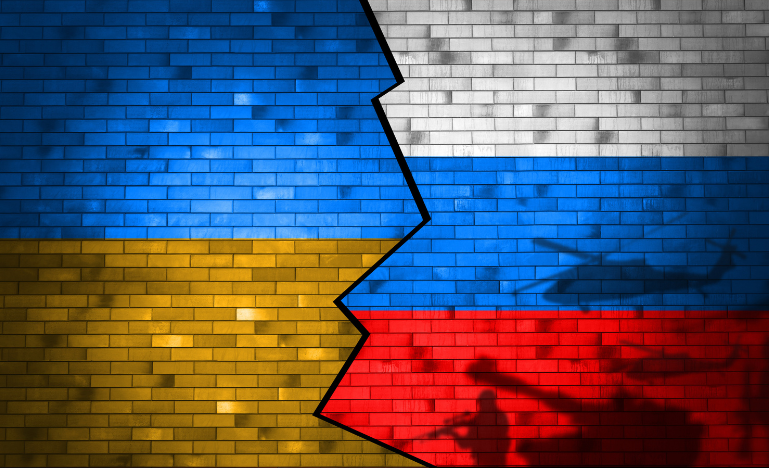
It’s been four years since Russia launched its full-scale war of aggression against Ukraine.
At the time, Canada, home to the second-largest Ukrainian diaspora in the world, opened its doors to people fleeing the conflict. Under the Canada-Ukraine Authorization for Emergency Travel (CUAET) program, nearly 300,000 people were granted three-year visas to live and work here.
They didn’t come here as refugees; they came on a temporary basis and paid their own way to flee the war.
But as the conflict drags on and enters its fifth year, there’s no indication that those who fled their homeland will get to go home any time soon. And for many, the more time that passes, the deeper their roots here grow. Yet, for most, there is no path to permanent residency to stay, so they’re stuck living in limbo.
“It's terrible because you cannot go back. There is nowhere to go back to. There is no safety,” says Valentyna Nyedova.
“And it’s kind of a situation where you don’t fully belong here because of your status.”
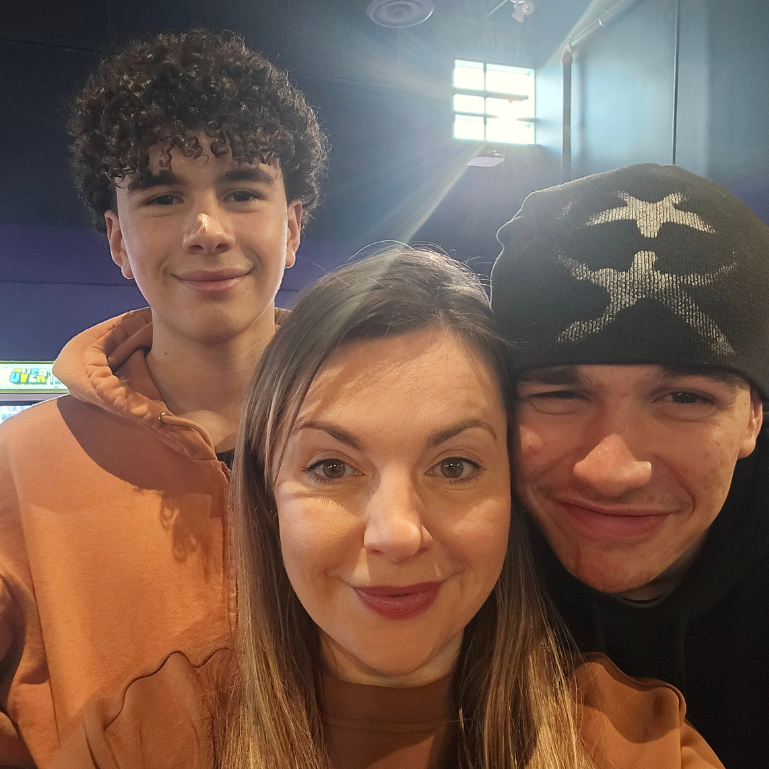 Valentyna Nyedova and her sons Ilyas and Omar
She’s from Odessa and came to Canada in 2022 with her two sons, now 18 and 14. Her parents came here the same year after initially fleeing to Romania.
They all settled in the national capital region, and Nyedova cannot say enough about how wonderfully people treated and helped them when they arrived. Four years on, they’ve built relationships and made friends. Her father has even learned French.
“The boys are very happy here. We all want to stay, but I'm not sure if we can,” she says.
No clear route
Her lawyer Jacqueline Bonisteel says many Ukrainians are in a “tricky spot.”
Those who came under the CUAET program have been able to stay, work and study, and renew their status. Until the end of March, they can still submit applications to renew their temporary status.
But in most cases, there’s no clear route to permanent residence.
While some of her Ukrainian clients qualify under the standard economic categories, that’s not a route open to everyone. The express entry program for skilled workers ranks applicants using a points-based system that considers their age, marital status, education level and official language proficiency.
“It's very, very difficult to qualify for those economic categories these days,“ Bonisteel says.
Anyone over 40 is at a real disadvantage, even if their English is strong. There was also an advantage for those who had a really supportive employer who wanted to help keep them, but those points are now gone.
“It's disadvantaged the people who are a little bit older or might have a lower level of education. Even if their English is very strong, their chances of selection are not good. If your level of English isn't strong, then your chances are almost zero.”
Some of her clients are trying desperately to learn French because French speakers are being prioritized right now. But whether they’ll be able to get their levels up before their work permits expire is an open question.
“It's really, really tough. There's no easy path, there's no guarantees, and that's super stressful if you're trying to make a life here,” Bonisteel says.
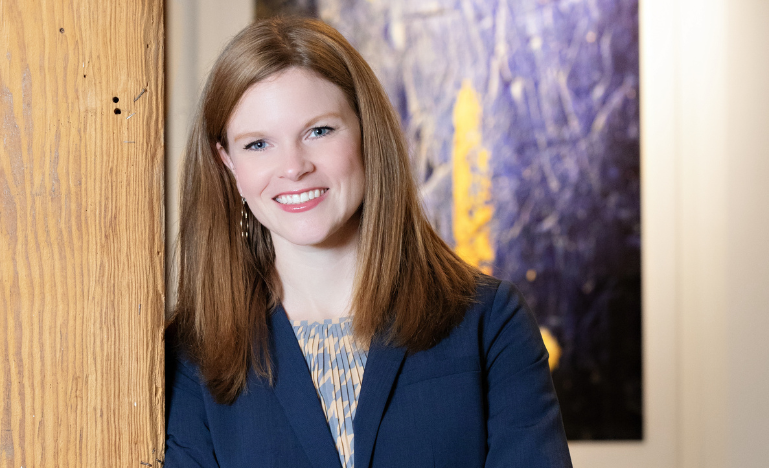 Jacqueline Bonisteel
In October 2023, a special program was announced that allowed people with family members who were Canadian citizens or permanent residents to be sponsored and to apply for permanent residence, but it has since been discontinued. That was only available to a limited number of people, however, and the processing of applications is taking a long time.
Bonisteel says she’s getting calls from people who qualified for that program who have no idea how long it's going to take.
In a statement, Immigration, Refugees and Citizenship Canada (IRCC) said more than 25,000 people applied through the family reunification pathway. While 3,200 applicants have been approved, demand far outweighed the number of available spaces. In categories where applications exceed planned targets, the waits are longer.
“While wait times can vary for individual applications, they are processed on a first-come, first-served basis,” the department said, noting times will vary based in part on when people applied.
IRCC pointed to new measures announced in January to make it easier for those who applied to this program to extend their stay in Canada while waiting for a decision on their application.
'A really tough spot'
However, Bonisteel says the bigger issue is people who didn't meet the criteria for the family reunification program. Often their only option is to apply for permanent residence on humanitarian and compassionate grounds, but IRCC said last year it would take more than 10 years to process those applications.
“I have several clients who have pending applications under that program who are hoping that will be their route to staying here permanently. But it's not guaranteed. It's a very subjective program,” she says, noting one officer will eventually get the file and decide if there's enough humanitarian and compassionate factors to ground the permanent residence application.
People going this route can easily be refused. If it takes a decade to process, many with pending humanitarian applications will fall out of status before they get a decision if the CUAET measures aren’t extended.
“Then they have a decision to make,” Bonisteel says.
“Do they stay and try to keep waiting and see what happens without status here? Or do they abandon that application and head back? If nothing changes, then there's going to be a lot of Ukrainians in a really tough spot a few years from now.”
Nyedova says she’s already in a tough spot. Fluent in French and Ukrainian, she’s worked as an interpreter since she arrived in Canada. But a month ago, she got a termination letter. She’s been fervently searching for work since, but so far has had no luck.
“I've lost job opportunities because I am on an open work permit. And because of that, the potential employers don't know how long you might be here.”
Her English is excellent, and her French is at a CCC level. She says she’d be qualified for government jobs if she had her permanent residency, but instead, she’s watching opportunities slip away. And she’s 43, which doesn’t work in her favour under the express entry points system.
“I'm telling you, I'm struggling. I'm struggling to find a job,” Nyedova says.
“I haven't been able to get my permanent residency. It’s like playing a video game with immigration, where the rules are constantly changing.”
‘Insane and unfair’
Ihor Michalchyshyn, the CEO and executive director of the Ukrainian Canadian Congress (UCC), says people who fled the war are in a sort of no man’s land, as they don’t fit into the category of permanent residency or refugee.
“They're kind of in between on a temporary status, which was fine in the moment they arrived. But increasingly it provides challenges to life in Canada.”
In addition to employment issues, people face paying international tuition fees because they're not refugees or permanent residents. Nyedova is among them.
“My son turned 18 last July. He needs to go to university, but I cannot pay international fees,” she says.
Michalchyshyn says that while everyone hopes and prays the war will end soon, nobody knows how long it will last. What if it goes on for another two, three or four years? At that point, people will have been in Canada for eight years, and their status will still be temporary.
“That seems kind of insane and unfair,” he says.
The UCC has asked Immigration Minister Lena Diab to create a pathway to permanent residency for Ukrainians already in Canada, similar to what was done for Hong Kong citizens.
“Using that as a template that would make it clearer and streamline the process for Ukrainians, given the huge interest and the backlog in the Canadian immigration system,” Michalchyshyn says.
“Canada welcomed Ukrainians. They’re here, and they're working, living and integrating into communities, and many of them want to stay for years to come.”
Bonisteel says there was poor planning by the federal government.
“I think we could have anticipated that many of the people who came here with three-year work permits were going to set down some roots, bring their kids here and want to stay.”
She remains hopeful that something will be introduced when all these work permits start expiring in 2027 or 2028. But as of today, she doesn’t see it and says, “Ukrainians just can't rely on something hopefully coming down the pipeline.”
Michalchyshyn says to date, no one has agreed to create a permanent pathway.
“But no one has said they would never do it either.”
The UCC has been working with provincial governments to tap into their capacity through provincial nominee programs, focusing on sectors with labour shortages. He says governments in Manitoba and Newfoundland and Labrador are interested in having the Ukrainians living there now stay as immigrants.
‘People are tired’
In a statement, IRCC said, “Canada’s support for the people of Ukraine remains steadfast.”
The department reiterated that eligible CUAET visa holders can apply for an extension of up to three years before March 31, 2026. While those applications are processed, their status is maintained.
“When it is safe to do so, we expect many Ukrainians may wish to return home. For now, a pause on removals remains in effect for Ukraine—a recognition of Russia's ongoing invasion of Ukraine,” IRCC said.
However, in an interview with the Canadian Press in January, Minister Diab said the government is aware some CUAET visa holders are here to stay.
“We now know it’s not temporary. They’ve been here for X number of years, and for the most part, people are working, they’re building a life, you know, they have children and so on. So I understand that,” she said.
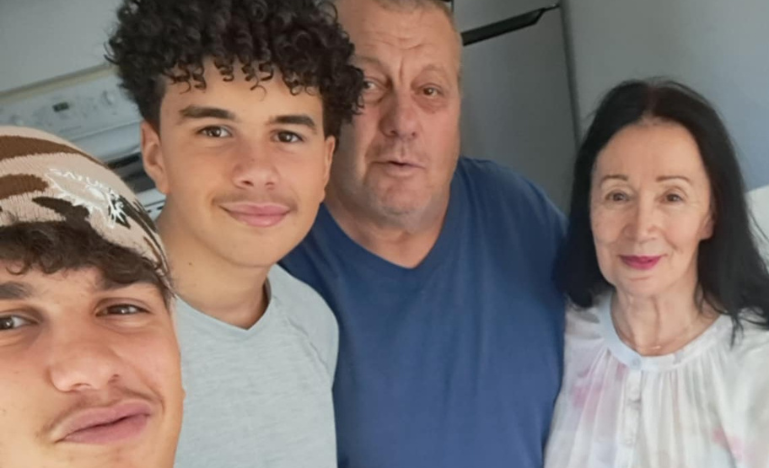 Valentyna Nyedova's sons Ilyas and Omar, father Oleksandr, and mother Tetyana.
Nyedova says Ukrainians have changed in the years they've been here and adapted to Canadian life. For children born here, this is the only home they know. Returning to Ukraine would be “a reverse cultural shock.”
Ultimately, what people want is peace. Since arriving, she says they’ve worked hard, struggled to make ends meet, and haven’t been able to enjoy life.
“That’s a shame because it’s a beautiful country, and we do love it. I am extremely grateful for the opportunity that we've been given,” she says.
“People are tired of fighting and trying to get information about applications. We would just like to stay and continue working, and you know, and just continue living.”