Federal Court of Appeal says use of Emergencies Act was overreach
The invocation infringed on freedom of expression and protection against unreasonable search and seizure
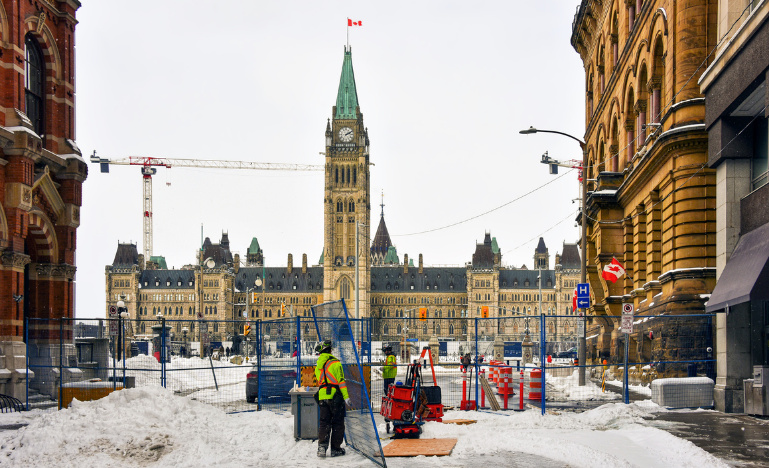
The Federal Court of Appeal has ruled unanimously that the federal government’s invocation of the Emergencies Act to end the occupation of downtown Ottawa and border blockades by the so-called “Freedom Convoy” and its associated protests was overreach.
The Court found the move did not meet the standard laid out in the Act, and infringed on the Charter rights of freedom of expression and protection against unreasonable search and seizure.
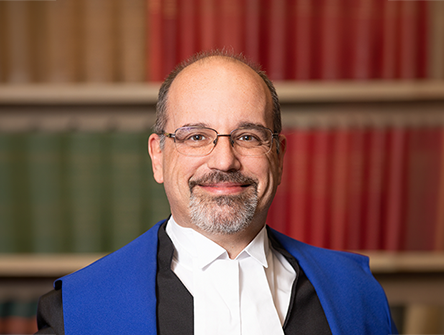
“The Federal Court correctly determined that the declaration of a public order emergency was unreasonable and that parts of the Regulations and Economic Order infringed paragraph 2(b) and section 8 of the Charter,” Chief Justice Yves de Montigny wrote in dismissing the appeal.
The Canadian Civil Liberties Association (CCLA), a litigant in the case, says that while it does not endorse the actions of members of the convoy or the blockades, the decision is important for the rule of law and the rights and freedoms of Canadians. It drives home the idea that a robust democracy requires court oversight to prevent the government from exercising its powers arbitrarily. While the police needed to dismantle the blockades, existing laws could and should have been used to do so.
In particular, the CCLA singled out the regulations in the invocation of the Act, which criminalized attendance at any assembly that could have breached the peace, as well as the freezing of bank accounts of convoy and blockade participants. The Federal Court had found this unconstitutional.
Ewa Krajewska, a partner with Henein Hutchison Robitaille LLP in Toronto who represented the CCLA in the case, points to language in the Act which makes clear that to constitute a national emergency, threats must be to the security of Canada and that existing laws must be insufficient to address them.
“Neither of those legal thresholds was met in this case,” she says.
The threats to Canada’s security must be threats of serious violence. While the federal government argued that economic threats or threats to property were serious threats of violence, the Federal Court of Appeal disagreed.
“They have to be threats of bodily harm.”
Krajewska says the legislation was drafted to ensure that economic threats or those of a speculative nature were not sufficient to justify the invocation of the Act.
The measures the government put into place, which criminalized the entire protest, limited the rights of peaceful protesters who did not intend to participate in the blockades, she notes. Likewise, the measures requiring financial institutions to provide protesters’ personal financial information to the RCMP and the Canadian Security Intelligence Service (CSIS) violated their rights, given the unreasonable searches.
“We’re very pleased with the result,” Krajewska says. “The reasoning of the Federal Court of Appeal really goes to the heart of the rule of law and democratic values.”
If the case is appealed to the Supreme Court of Canada, the CCLA plans to continue its challenge.
The challenge of predicting the future
Brendan van Niejenhuis, a partner at Stockwoods LLP in Toronto, who acted as counsel for the federal government during the Public Order Emergency Commission (POEC), wonders about the public interest of this ruling in light of the selective nature of the evidentiary record of judicial review, as opposed to the Commission’s expansive record.
“It is debatable whether how it treated the question of hindsight in light of the purposes of the Act,” van Niejenhuis says, speaking on his own behalf.
“The Act certainly seems to recognize that these decisions will be made in the ‘fog of war,’ so to speak.”
One important fact he didn’t see mentioned in the Federal Court of Appeal’s decision is that on the date of the invocation, there were approximately 2000 firearms on the loose in Ontario from a stolen trailer.
“It was certainly prominent evidence that I recall. The commissioner of the OPP and other law enforcement officials had concluded there was a danger to the security of Canada.”
van Niejenhuis says that different points of evidence will have different significance to members of Cabinet. It becomes an exercise in trying to predict the future, which is difficult to question when certain feared events didn’t come to pass.
“The way I read it, the evaluation was meant to be whether there were reasonable grounds from the perspective of the decision-maker with what they knew, not what they could have possibly.”
He expects the FCA decision will sow some confusion. It upheld one of the biggest sticking points in the Federal Court ruling, which rested on the Act’s stipulation that what constitutes a threat to national security must rely on CSIS’s definition.
van Niejenhuis says the language was difficult for witnesses to articulate when giving evidence, but the Commission, with the benefit of a relatively comprehensive record, was able to assess it in that context.
“Perhaps the decision of the Court of Appeal in this regard may underweight the challenges of literally predicting the future when it looks at the issue of threat, and that it became somewhat distracted by the very good news that there were no major acts of violence that actually came to fruition.”
He points out that the Commission heard about the rising fear of counter-protests, which had started happening in Ottawa and Windsor. None of that was referenced in the Court of Appeal decision, again reflecting the partial record it relied upon.
As for threats to bodily harm, van Niejenhuis says the Court restricted evidence to the blockade at Coutts, Alberta, where the RCMP found a cache of weapons. It didn’t engage with the notion that ongoing lawlessness at other protests, including in Ottawa, increased the likelihood that citizens would start taking matters into their own hands.
“I’m not sure that it’s realistic as a public safety assessment, like the Court has done, to say that we have to wait until we see a specific group of bad actors before we assess that there’s a threat of serious violence.”
When a province doesn't act
One of the central issues with the invocation is that the Act doesn’t address what happens when a province doesn’t act when it should and has the capacity to. That was the case with Ontario as this unfolded.
Krajewska says there’s recognition of the tension in the Act, which requires consultation with the provinces, but it doesn’t require their consent.
“It’s not a carte blanche for the federal government to step in if provinces aren’t doing anything. But it doesn’t really solve anything—it just notes that this is a bit of a sensitive issue where government relations with the provinces need to address this issue. And it leaves the door open for the government to act if a province is not acting.”
She notes the ruling doesn’t really provide any guardrails around that.
Leah West, a former federal national security lawyer who’s now a professor at Carleton University, says the ruling essentially flipped the conclusion of the Commission on this issue. While the Commission considered this a failure of federalism, the Act doesn’t give the federal government the right to step in.
“They didn’t like that Ontario wasn’t doing what they wanted, but that’s not sufficient here to declare it a national emergency,” she says.
“It doesn’t meet any of the definitions.”
This leaves it up to Parliament to change the legislation if it wants to give itself the ability to step in due to inaction.
As for whether this case goes any further, West says it’s particularly thorough and much more critical of the government than the Federal Court’s ruling. She thinks the detail in it is a way to make it appeal-proof.