Members
Still climbing the mountain
A decade after the Truth and Reconciliation Commission tabled its final report, lawyers who work with Aboriginal communities are concerned about the lack of progress on two particular calls to action
BY Sue Bailey 15 Dec. 2025

Log in to listen to this article
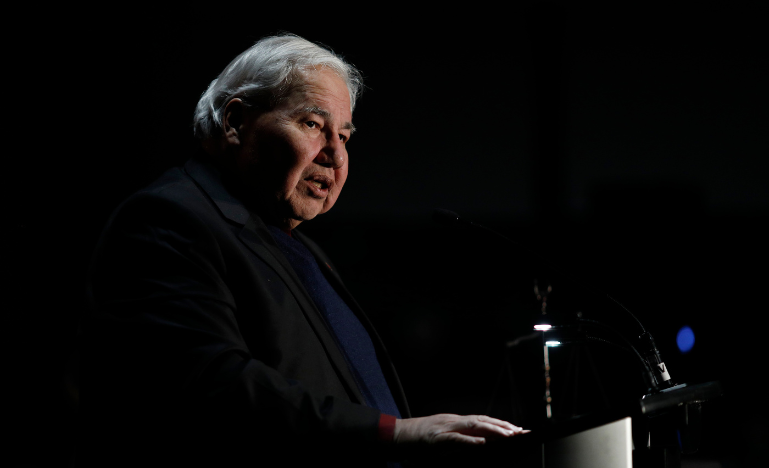
The late Murray Sinclair was realistically hopeful 10 years ago when the Truth and Reconciliation Commission released its final report on this day.
“It will take years, perhaps generations,” but the former justice and commissioner believed “a period of change is beginning that if sustained by the will of the people, will forever realign the shared history of Indigenous and non-Indigenous peoples in Canada.”
The TRC’s 94 calls to action are a roadmap toward atonement for the ongoing trauma of residential schools.
A decade later, legal watchers are taking stock of progress on those requirements for true reconciliation.
The 94 calls urge governments, corporations, organizations, and individuals to revamp legal, education, child welfare, language and culture, as well as health systems that foster injustice and then punish its victims.
The list reflects what the commission heard over six years from 6,500 survivors and witnesses of residential schools. For more than 150 years, the church-run, federally funded institutions were Canada’s brutal attempt to “kill the Indian in the child.”
At least 150,000 children were taken from their homes. Many suffered sexual and physical abuse while being stripped of their language and culture.
It is estimated that more than 4,000 students did not make it home, including those buried in unmarked graves across the country.
In 2015, former prime minister Justin Trudeau pledged to work with Indigenous, provincial, and territorial governments to “fully implement” the 94 calls to action.
But the status of any progress depends on who you ask and how it’s defined. It must also be assessed against a backdrop of chronic underfunding for Indigenous communities across health, education, housing and other sectors.
The federal government’s own tracking website says more than 85 per cent of the 76 calls for which it is solely or partly responsible are “complete or well underway.”
Indigenous Watchdog, a registered non-profit monitoring group, says 15 per cent (14) of the 94 calls are complete, 45 per cent (42) are in progress, 23 per cent (22) are stalled, and 17 per cent (16) are unstarted.
Completed calls include federal acknowledgement of Aboriginal language rights; a new Aboriginal Languages Commissioner; a statutory National Day for Truth and Reconciliation to honour survivors and mark the history of residential schools; Canada Council for the Arts funding for reconciliation projects; and adding to the Oath of Citizenship a commitment to observe Indigenous rights and treaties.
Child welfare progress includes Bill C-92, An Act respecting First Nations, Inuit and Métis children, youth and families, which took effect in January 2020. It affirms Indigenous jurisdiction over child and family services.
In June 2021, the federal United Nations Declaration on the Rights of Indigenous Peoples Act came into force. It was hailed as a major milestone, requiring Ottawa to consult and co-operate with Indigenous leaders, ensuring Canadian laws “are consistent with the Declaration.”
Lawyers who work with Aboriginal communities say those are steps in the right direction. But they’re especially concerned about the lack of progress on two particular calls to action.
The first says Canada must repudiate concepts “used to justify European sovereignty over Indigenous lands and peoples, such as the Doctrine of Discovery and terra nullius” –- the Latin term for “no one’s land” –- “and to reform those laws, government policies and litigation strategies that continue to rely on such concepts.”
The other asks federal, provincial and territorial governments to stop relying on statutes of limitations “to defend legal actions of historical abuse brought by Aboriginal people.”
Brad Regehr, a partner with Maurice Law in Winnipeg, says those neglected items are two of the biggest barriers to reconciliation.
“I view it as essentially denying justice to Indigenous Peoples.”
He belongs to the Peter Ballantyne Cree Nation in Saskatchewan and is a survivor of the Sixties Scoop.
Regehr made the TRC’s calls to action his personal priority when he became the Canadian Bar Association’s first Indigenous president in 2021.
He says government lawyers are still using provincial statutes of limitations to thwart claims of wrongdoing that fall outside the jurisdiction of the Specific Claims Tribunal. Typical cases include breaches of treaty and Aboriginal title.
The attitude is still too often: “‘Yeah, we treated you wrong, but that occurred 50 years ago. You’re outside the limitation period — too bad for you.’”
Imposing such restrictions blithely ignores that from 1927 to 1951, it was illegal for lawyers to advise First Nations on matters related to reserve lands without government permission, Regehr adds.
He notes that the call to action is for governments at all levels to repudiate the "Doctrine of Discovery," beyond language in the United Nations Declaration on the Rights of Indigenous Peoples.
The doctrine “is completely fictional,” he says, “and yet, in my view, the entire system of landholding in Canada is based on that concept.”
Fulfilling those calls to action may be legally messy, but the federal government cannot cherry-pick, Regehr says.
“Things will fall where they fall, and they’ll have to address them, and that’s reconciliation. They can’t just stick their heads in the sand and pretend it will just go away.”
In that vein, he’s not encouraged by the tone set so far by Prime Minister Mark Carney.
Indigenous leaders have lambasted the lack of consultation before the new Liberal government’s Building Canada Act passed in June to fast-track major projects, plus the memorandum of understanding signed last month with Alberta, which declared one or more pipelines to the Pacific would be in the “national interest.”
Carney has repeatedly said Indigenous rights will be upheld.
But the failure to renounce the "Doctrine of Discovery" and review existing legislation raises serious doubts, says Kate Gunn, a partner with First Peoples Law in Vancouver.
The firm works with Indigenous communities trying to assert jurisdiction over their lands and resources.
Nullifying the doctrine is a crucial test of the government’s commitment to reconciliation, she says.
“It calls on them to grapple with some really difficult questions about the foundation of the Canadian legal system and the tests that have been developed by the Supreme Court and others for limiting and recognizing Aboriginal and treaty rights.”
Fulfilling that call to action would get to the bedrock issue of the Crown’s “unilateral assertion of control,” she says.
“I think the reluctance lies in just the significance of that step.”
In his speech 10 years ago, Murray Sinclair likened achieving reconciliation to climbing a mountain — one step at a time.
“It will not always be easy. There will be storms, there will be obstacles, but we cannot allow ourselves to be daunted by the task because our goal is just and it is also necessary.”
He reminded his audience why the TRC journey had begun.
“We did this for the children who were taken away and for the parents who were left behind to cry for them,” he said, standing near two empty chairs to honour the memory of children who never came home.
“We owe it to each other to build a Canada based on our shared future, a future of healing and of trust.”