‘We are not living in an era of kings’
Federal Justice Minister Sean Fraser says he's troubled by trend of governments using the notwithstanding clause to cater to political opportunity
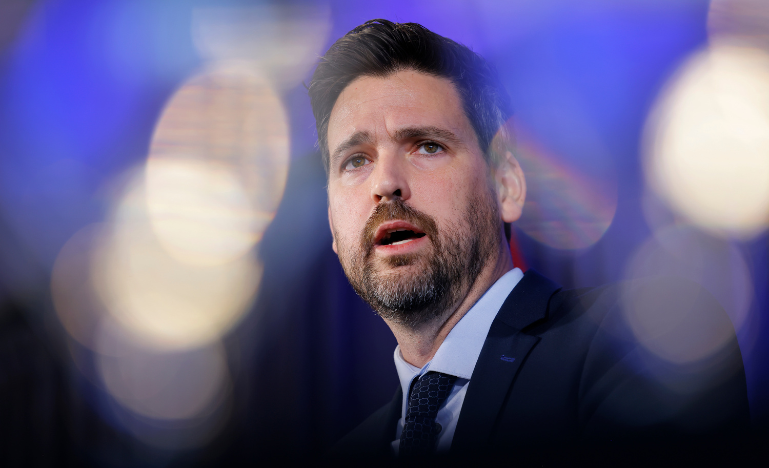
Federal Justice Minister Sean Fraser says although we’re in a time of democratic backsliding in Canada and abroad, “we are not living in an era of kings who can overrule courts.”
“The very concept of the rule of law is that even those who make the laws are subject to them,” he told the Canadian Bar Association’s annual general meeting in Ottawa on Thursday.
“If we lose sight of this important tenet of democracy, we will have lost ourselves as well.”
In a speech focused on the importance of defending the rule of law and protecting democracy, Fraser waded into the ongoing debate about the use of the Charter's override clause, while noting he would be careful in his remarks given that cases on the issue are before the courts. The challenge of Quebec’s secularism law, Bill 21, is set to make a highly anticipated appearance before the Supreme Court of Canada in March.
“Suffice it to say, it is a troubling social trend when we see governments increasingly ready to reach for the notwithstanding clause in order to cater to a distinct political opportunity, without regard for the rights of certain individuals that may be violated in the process,” he said.
“One of the things that I am deeply concerned about is that if we don't seek to protect against this democratic backsliding, we are going to see lesser social and economic outcomes for the people who depend upon the decisions that governments make.”
When the notwithstanding clause was rolled into the Charter of Rights and Freedoms, it was seen as a nuclear option – an instrument to be used in urgent and exceptional circumstances. Since 1982, the clause had been rarely used, except by Quebec. But in recent years, provincial governments in Ontario and Saskatchewan have also started using it more frequently. Last fall, Alberta Premier Danielle Smith used the clause to try to avoid court scrutiny of three pieces of legislation focused on transgender youth and adults. That followed her decision a few weeks earlier to invoke it to force striking teachers back to work.
The collective benefit of protecting rights
Drawing on lessons from the book, Why Nations Fail, Fraser said countries that protect their institutions have faster-growing economies and better social protections than those that don’t. Part of that is understanding that democracy is not just a system of voting, but a strategy for peacefully resolving disputes and a tool to ensure that everyone has their say, regardless of language, jurisdiction, background, or perspective, and whether they ultimately get their way.
“It's important that citizens are able to live freely and know that governments do not operate with unconstrained power, that there are certain rights and freedoms that are inalienable, that governments may not take away because they've never been given that authority,” he said.
While it’s easy to turn a blind eye when governments take away another person's rights, the minister said that’s when people need to stand up — even when doing so is difficult. Part of democracy is the agreement that people are entitled to certain basic principles and rights
“Even if it's not you who will be personally impacted as an individual, there is a collective benefit when we protect the rights of everyone in this society, regardless of the colour of their skin, the God they pray to, or the person that they love. I don't want to live in a country where my son has greater opportunities than my daughter,” Fraser said.
“If we cease to have a practical impact and implication of these rights, our Charter of Rights and Freedoms would not be worth the weight of the paper on which it is written.”
Critical to protecting these rights are institutions that back them up and enforce them free of political interference, he added.
During a question-and-answer period, CBA President Bianca Kratt said that when elected officials publicly delegitimize court decisions and threaten the routine use of their notwithstanding clause, the organization sees that as feeding a crisis of governance. She asked the minister what the federal government's strategy is to protect judicial independence and restore public confidence in Canada’s constitutional framework.
Fraser said seeing how political actors from different parties and regions treat the independence of the judiciary and the justice system more broadly is “deeply, deeply concerning.” That includes politicians suggesting that the RCMP should jail their political opponents, criticizing the decisions of courts, knowing the judge responsible for the decision cannot defend themselves in public, and reaching for the notwithstanding clause “to cater to a unique political opportunity that may be a good fundraising email but will potentially violate constitutionally protected rights of vulnerable people.”
“We have to ask ourselves if this is how we should want our democracy to operate,” Fraser said.
Acknowledging he has a hard time letting that go unchallenged, when appropriate the government will step up and appear in court to defend democracy and the rule of law, and issue public statements in response to attempts to erode the public trust in the judiciary.
“One of the things that I just find so frustrating in this conversation is that those who are quick to criticize a decision actually have the tools, typically, that would allow them to change the law so a court would make a different decision,” Fraser said.
“If you want to change that law, you have to go through a process. You have to ensure that enough of your constituents are on side, that you have the political support to make a change, and you have to do it within the constraints of the Constitution.”
Beyond outcomes that poll well
Over the last year, the chief justices in Ontario and Alberta have taken the unusual move of calling out elected politicians over their criticism of the courts. Supreme Court of Canada Chief Justice Richard Wagner told the AGM that, while recent surveys have shown an increase in Canadians’ trust in institutions, including the judiciary, that trust depends on judges remaining clearly distinct from political actors.
“Judges must not mirror the rhetoric or values of partisan life; the public deserves better. It deserves a judiciary that rises above politics (and is) independent and impartial,” he said.
“Public trust is foundational to the judiciary's ability to decide cases free from external pressure. The willingness of some members of the judiciary to speak up underscores both the seriousness of the moment and the shared responsibility we all bear in preserving the integrity of our democratic framework.”
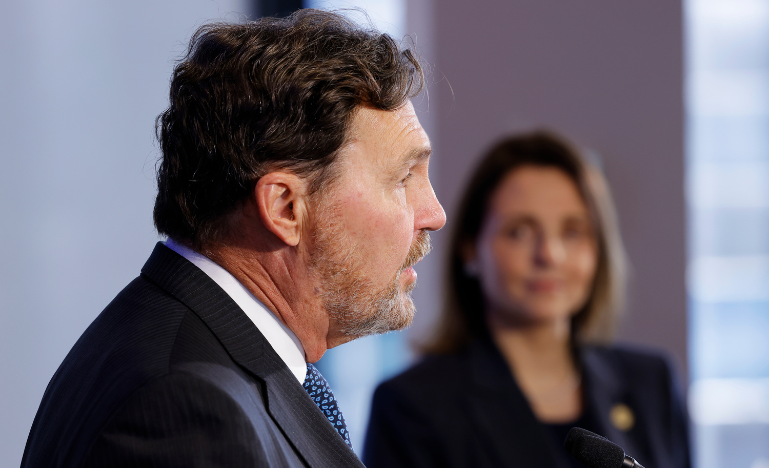 Chief Justice Richard Wagner and CBA President Bianca Kratt
Kratt echoed that concern in her remarks, noting that in recent months, she’s had to issue multiple statements and letters directed at politicians and commentators who fail to grasp “that the role of our courts is not to produce outcomes that poll well.”
“All Canadians, including politicians, are welcome to express disagreement with court decisions,” she said.
“But it is not acceptable for political leaders to launch verbal attacks on the courts themselves. Governments can try to change the law, but they cannot demand that courts ignore the law and defer to their political preferences.”
Wagner noted the CBA has a strong track record of speaking up in support of judicial independence and the rule of law.
“But these troubled times call for even more effort,” he said.
Fraser agreed the legal profession has a duty to act in a leadership role in this regard, as it’s uniquely positioned to defend the rights of others. It’s the only group entitled to appear in court on behalf of another person and to have a full understanding of the rights Canadians are entitled to, as well as the constraints on government power to enforce or violate them.
“We have a unique privilege, and we need to understand that creates a unique responsibility. We need to be a voice for the voiceless and stand up for those who cannot stand up for themselves,” he said.
“We need to insist that our democracy is protected, and recognize that it is only as strong as the laws and institutions that exist. We would do very well to remember that the highest office in our democracy is not a member of Parliament, a minister, or a prime minister; it's a citizen. The value of our laws and institutions is only going to be as strong as the defence that Canadian citizens are willing to mount.”