Members
New tort marks turning point
Experts say the Supreme Court’s acknowledgement of how coercive and controlling behaviour interferes with a partner’s autonomy in the context of intimate partner violence is significant
BY Madalyn Howitt 21 May 2026


Log in to listen to this article
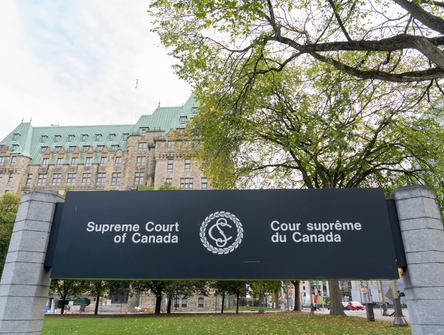
For the first time in Canada, people who have suffered harm through intimate partner violence will be able to seek damages thanks to a Supreme Court decision that creates a tort of intimate partner violence.
The split decision is being touted as a landmark in family law.
“It's very rare for the Supreme Court of Canada to create a new tort,” says Shelley Hounsell, K.C., a family law practitioner with Presse Mason in Halifax.
To now have a tort that acknowledges how coercive and controlling behaviour interferes with a partner’s autonomy is very significant. She tells Verdicts & Voices host Alison Crawford that, while some torts have been around for hundreds of years, new torts arise through evolution and fill gaps where existing torts cannot remedy a wrong committed by one person against another.
“So, the significance here is one, we have a new tort of intimate partner violence, but two, it recognizes the kind of behaviours we've only recently classified in the last 20 years.”
Coercive control can include physical and sexual abuse, as well as financial control and preventing a partner from holding assets in their name. It can also involve interfering with their social media, stalking and surveillance, verbal abuse, harassment, and humiliation. In some cases, it extends to controlling how a partner raises their children or socializes with friends and family.
“It's the kind of behaviour where one person loses their voice, loses their ability to say no. They lose their ability to make decisions for themselves and to promote how they feel they would like to live in a relationship,” Hounsell says.
She’s thankful the Court has identified these behaviours because sometimes she struggles to define what she’s seeing.
“I know it based on conversations with clients, but it's difficult to articulate at times because it's different. It's a cluster of behaviours rather than an individual act.”
In Ahluwalia v. Ahluwalia, a woman proved she had been the victim of abuse at the hands of her husband over the course of their 16-year marriage.
She was awarded $150,000 in damages, but at the Court of Appeal, the damages were reduced by $50,000, with the Court declaring that no new tort or domestic violence or coercive control should be recognized.
The case made its way to the Supreme Court, where the issue at hand was the recognition of a novel intentional tort of family violence. The 6-3 decision created a narrower tort of intimate partner violence, rather than a tort of family violence.
“The tort of family violence was broad enough that it could deal with violence between other family members, for example, a parent and a child,” says Vanessa Lam, a lawyer who provides specialized legal advice and research to family law practitioners through Lam Family Law in Markham, Ontario.
One of the main elements of the tort of intimate partner violence is that there is an intimate relationship. While the parties need not be married or cohabiting, there should be an interrelatedness between them.
“That's what makes this a unique tort, but it's also limiting,” Lam says.
For instance, one of the interveners, Justice for Children and Youth, said that while abuse against children is terrible, it might be a tort in itself or need some sort of wrong to be redressed, but not in this context and not in this case.
“Whether or not they recognize a tort of family violence or a tort of intimate partner violence, I think it's really important that there is a name for something for an intimate partner who's gone through an abusive relationship,” Lam says, as it means people won't have to rely on a patchwork quilt of torts that were developed in a very different context between strangers.
The decision establishes a three-pronged test for a tort of intimate partner violence.
“When you look at the decision carefully, you will see that the majority of the Supreme Court of Canada wanted to create this tort but also wanted to create the uniqueness of the experience so that the tort may be found under special circumstances,” Hounsell says.
That includes showing that the coercive behaviours arose in an intimate partnership or its aftermath, that the defendant intentionally engaged in the conduct, and that the conduct constituted coercive control.
“Often, I see more egregious behaviour happening post-separation, which highlights for me the seriousness of the violence that was experienced during the relationship,” she says.
The decision gives family lawyers another avenue to address coercive behaviours on behalf of their clients.
“The ability to have a civil remedy to address wrong and to punish a perpetrator is important in the options that a victim has available to them,” Hounsell says.
Lam says the majority honed in on the importance of defining subtler forms of coercive control.
“Battery requires a physical unwanted touch, right? The intentional infliction of mental distress requires a psychological impact and proof of damages. Whereas the more subtle form of coercive control, which could be isolation, humiliation, surveillance, it wouldn't be captured under any of these other existing [torts].”
Hounsell does have one potential concern, and it relates to money.
“In civil law, we often have an insurance company that's representing or defending a wrongdoer, so the insurance policy is able to pay out the damage award. In family law cases, we don't have an insurance policy to look to for compensation when a damage award is made, so we're looking at fairly small pots of family assets that are available to divide again,” she says.
If a person makes a successful tort claim for intimate partner violence, they should be compensated for damages. But if damages are awarded, how will they be paid? And will it interfere with child and spousal support payments, Hounsell asks.
“I wouldn't want to see the damages so low that it undervalues the experience of the person. The damages need to be appropriate to the suffering and the ability to move forward. But it's going to be a challenge for judges to discern which is appropriate in terms of damages and the impact.”