Alberta justices speak out about the importance of independence
Rare statement comes after Premier Danielle Smith expressed a desire to ‘direct them’
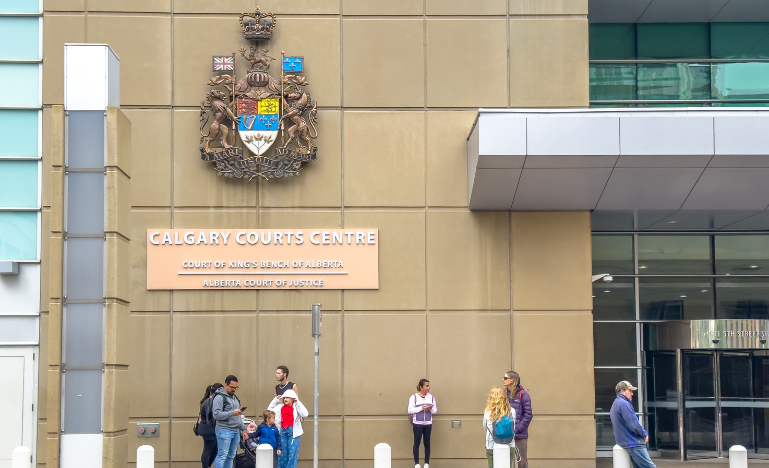
Alberta’s chief justices have issued a rare public statement underlining the importance of judicial independence in the wake of comments by Premier Danielle Smith about her desire to “direct them.”
Signed by acting Chief Justice of Alberta Dawn Pentelechuk, Court of King’s Bench Chief Justice Kent Davison and James Hunter, Chief Justice of the Alberta Court of Justice, the statement makes clear their role is to serve Albertans and is fundamental to a properly functioning democracy.
Their statement said this involves three separate branches of government that exercise their power and authority independently, as set out in the Constitution.
“The executive branch makes policy and manages government operations. The legislative branch makes laws. In turn, the judicial branch interprets and applies those laws to disputes brought before the courts,” the justices said, noting part of their role is to interpret and apply the Constitution and the Canadian Charter of Rights and Freedoms when a party requests that of them.
Each branch is independent, ensuring there are checks and balances across the system, which the justices said were “the foundation of a healthy democracy.” This independence fosters public trust and confidence in institutions, upon which all three branches of government depend. Equally important, they stressed, is that each branch of government respect and support the independence of the others.
“Independence of the judicial branch protects the public. It ensures judges can make decisions based solely on the law and evidence presented. It frees judges from pressure or influence from external sources, including the governments that appoint us.”
The response comes after Smith told listeners on her Saturday radio show, Your Province, Your Premier, that she wishes she could “direct the judges.”
Her comments were made when a caller brought up a murder trial where the accused was out on bail when he was arrested in connection with the death of two men. The caller wanted to know why the province can’t put its own bail rules in place to “tune these judges in” and keep people who pose a threat off the street.
“I wish I could direct the judges, honestly,” Smith said.
“The judges get very, very prickly when you criticize them, but boy, the example you just raised, they deserve the criticism.”
She continued by saying the problem is “we only choose our judges at the lower court level.”
The federal government selects judges who sit on the Court of Appeal and the King’s Bench.
“I just wrote a letter to [Prime Minister] Mark Carney saying maybe we should look at a way, now that we’ve got some openings on King’s Bench, for us to have a joint process to choose those judges so we start choosing judges in Alberta that reflect the values of how we want them to operate here,” Smith said.
CBA President Bianca Kratt commended the justices for their statement, but said it’s “highly concerning” that they felt the need to issue it.
“Judicial independence isn’t a privilege for judges, it’s a constitutional safeguard that ensures all Canadians … have access to courts free of political pressure,” she said on LinkedIn.
“With their measured, judicial language, the Chief Justices are warning us that this right is at risk. Let us heed their warning and demand that our leaders heed it too.”
It’s not the first time Smith has drawn criticism for comments she’s made about the judiciary. In December, she attacked the constitutional role courts play in Canada’s democracy.
“The will of Albertans is not expressed by a single judge appointed by Justin Trudeau and never faces any kind of recall campaign, never faces any kind of election,” she said.
The premier suggested that a federally appointed judge wasn’t able to render impartial rulings.
“The people have told us through our consultation, through our elections, the kinds of things they want us to do, and then we go and do them, and then the court can override it. And again, most of the judges are appointed by Ottawa and not by us,” Smith said.
“An unelected judge is not synonymous with democracy. Democracy is when elected officials who have to face the electorate every four years get to make decisions. That’s what democracy is.”
In a statement at the time, Kratt called it out as the latest example of rhetoric crossing the line from legitimate criticism of court decisions to unfounded attacks on the courts themselves.
“This troubling trend threatens public confidence in our justice system and puts the rule of law at risk,” she said.
“In a free society, it is emphatically not the courts' role to simply get out of the government's way. Rather, courts must ensure that laws are followed, including by the government, and that constitutional rights are upheld, regardless of which party is in power.”
Last May, Ontario Premier Doug Ford’s rant about judicial independence also drew the ire of the province’s three chief justices.
Upset about bail reform, the premier criticized “terrible bleeding-heart judges” for being “too soft on crime,” making decisions based on their “ideology,” and “overruling the government.”
“I can't wait until they retire,” Ford said. “Matter of fact, I'll pay them to retire earlier. I'll pay you out, for two, three, four years. Just get out of the system.”
He also floated the idea of electing judges rather than appointing them.
"Last time I checked there hasn't been any judges elected. Maybe that's the problem — we should do what the U.S. does," Ford continued.
"Let's start electing our judges, holding them accountable, and that's my rant for the day, because I've just had it.”
Neither Chief Justice Michael Tulloch of the Ontario Court of Appeal, Chief Justice Geoffrey Morawetz of the Ontario Superior Court of Justice, nor Chief Justice Sharon Nicklas of the Ontario Court of Justice found Ford's calling judicial independence a “joke” funny.
“Judicial independence is a cornerstone of our constitutional democracy. An independent judiciary protects the public, not just judicial officials. It means a society governed by the rule of law,” they said in a rare joint statement, noting every Canadian has the constitutional right to have their legal issues decided by a fair and impartial judiciary.
“Our justice system is founded on public confidence that decisions, whether popular or not, are fully heard and fairly made. It is crucial that the judiciary is both actually independent and appears to be independent so the public can be confident that judicial decisions are made without bias.”